

Artificial intelligence is no longer a futuristic idea reserved for technology companies. Today, it powers customer service, streamlines operations, strengthens cybersecurity, and helps organizations make faster, smarter decisions. At the same time, businesses are embracing digital technologies to replace outdated manual processes with connected, data-driven systems. This powerful combination is known as AI and Digitalization, and it is reshaping nearly every industry.
Whether you run a small business, manage a global enterprise, or simply want to understand the future of technology, learning how AI and Digitalization work together is becoming increasingly important. Companies that successfully adopt intelligent digital solutions often improve productivity, reduce costs, and deliver better customer experiences while remaining competitive in rapidly changing markets.
This guide explains what AI and Digitalization mean, how they complement each other, their practical benefits, and the real-world impact they are creating across different industries. By the end, you will have a clear understanding of why intelligent innovation has become a key driver of modern business success.
What Is AI and Digitalization?
Artificial Intelligence (AI) refers to computer systems that can perform tasks requiring human intelligence, such as learning from data, recognizing patterns, understanding language, solving problems, and making predictions. Digitalization, on the other hand, is the process of using digital technologies to transform business operations, services, and customer experiences. Together, AI and Digitalization create intelligent, automated, and data-driven organizations capable of adapting to changing market demands.
Although these terms are often used interchangeably, they represent different concepts. Digitalization focuses on converting traditional processes into digital workflows, while AI enhances those digital systems by enabling them to analyze information, automate decisions, and continuously improve performance.
For example, imagine a retail company that previously managed inventory using spreadsheets. After digitalization, inventory data moves into cloud-based software where updates happen automatically. When AI is added, the system begins forecasting demand, identifying slow-moving products, and recommending optimal stock levels without human intervention. This demonstrates how digitalization builds the digital foundation while AI adds intelligence to maximize efficiency.
Another practical example can be found in customer service. A company may first digitalize its support process by introducing an online help center and ticketing system. Later, AI-powered chatbots answer customer questions instantly, route complex issues to the right department, and even analyze customer sentiment to improve future interactions. This combination reduces response times while increasing customer satisfaction.
AI and Digitalization also depend heavily on data. Every digital interaction generates valuable information that AI algorithms can analyze for patterns and insights. Businesses use these insights to understand customer preferences, improve products, reduce operational costs, and make evidence-based decisions rather than relying solely on intuition.
Modern organizations increasingly combine AI with cloud computing, the Internet of Things (IoT), big data analytics, cybersecurity solutions, and automation platforms. These technologies work together to create connected ecosystems where information flows seamlessly between departments, enabling smarter operations and greater business agility.
Importantly, AI and Digitalization are not limited to large corporations. Small and medium-sized businesses are adopting affordable cloud software, AI-powered marketing tools, automated accounting systems, and intelligent customer support platforms to compete effectively with larger competitors.
The growing importance of AI and Digitalization extends beyond technology itself. Organizations now view digital transformation as a long-term business strategy rather than simply upgrading software. Companies that embrace intelligent innovation are often better positioned to respond to market disruptions, changing customer expectations, and emerging business opportunities.
From healthcare and education to finance and manufacturing, AI and Digitalization continue to redefine how organizations operate, collaborate, and deliver value in an increasingly connected world.
How AI Is Driving Digital Transformation
Digital transformation is no longer just about replacing paper documents with digital files. Today, AI is accelerating transformation by making digital systems capable of learning, adapting, and making intelligent recommendations. Instead of simply collecting information, businesses now use AI to convert data into actionable insights that support better decision-making across every department.
One of the most significant ways AI drives digital transformation is through automation. Routine tasks such as invoice processing, appointment scheduling, document classification, and customer inquiries can now be completed automatically with minimal human intervention. Employees spend less time on repetitive work and more time focusing on strategic initiatives that require creativity and critical thinking.
Predictive analytics is another major advantage. Traditional business software reports what has already happened, while AI predicts what is likely to happen next. Retailers forecast customer demand, manufacturers identify equipment failures before breakdowns occur, financial institutions detect fraudulent transactions, and healthcare providers anticipate patient needs using predictive models. These capabilities help organizations reduce risks while improving operational efficiency.
Customer experience has also improved dramatically because of AI-powered digital transformation. Businesses analyze browsing behavior, purchase history, and customer preferences to deliver personalized recommendations, targeted marketing campaigns, and customized services. Streaming platforms recommend relevant content, online stores suggest products based on shopping habits, and financial apps provide personalized investment insights.
AI also strengthens decision-making by processing enormous amounts of structured and unstructured data much faster than humans can. Executives gain access to dashboards that highlight trends, identify risks, and recommend strategic actions in real time. As markets become increasingly competitive, faster access to accurate information provides organizations with a significant competitive advantage.
Cybersecurity represents another area where AI contributes to digital transformation. Intelligent security systems continuously monitor networks, identify suspicious behavior, detect malware, and respond to cyber threats before serious damage occurs. Since cyberattacks continue to grow in complexity, AI-powered security solutions have become essential for protecting sensitive business information.
Human resources departments are also benefiting from AI. Recruitment software screens resumes, identifies qualified candidates, schedules interviews, and predicts employee retention trends. Learning platforms personalize employee training based on individual skills and career goals, helping organizations build stronger workforces.
However, successful digital transformation requires more than implementing AI tools. Organizations must develop a clear strategy, invest in employee training, ensure high-quality data, and establish ethical guidelines for responsible AI usage. Businesses that focus only on technology without addressing culture and leadership often struggle to achieve lasting results.
Companies leading digital transformation typically view AI as a business enabler rather than a replacement for human expertise. Employees continue making strategic decisions while AI provides faster analysis, identifies opportunities, and automates repetitive processes. This collaborative relationship between humans and intelligent systems creates stronger, more agile organizations capable of responding quickly to changing customer needs and market conditions.
As AI technologies continue evolving, digital transformation will become even more intelligent, personalized, and connected. Businesses that begin building strong digital foundations today will be better prepared to adapt, innovate, and succeed in the increasingly digital economy.
Key Benefits of AI and Digitalization
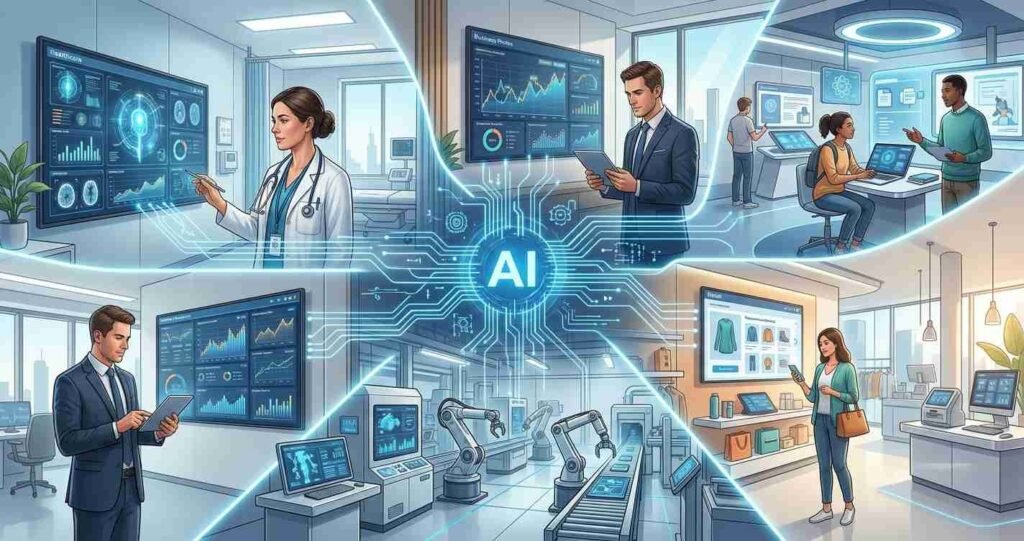
Organizations across the world are no longer adopting technology simply to modernize their operations. Instead, they are using intelligent systems to solve business challenges, improve customer experiences, and create long-term growth. This is where AI and Digitalization deliver their greatest value. Together, they help businesses move beyond basic automation and build smarter, faster, and more adaptable operations.
One of the biggest advantages is improved efficiency. Traditional workflows often involve repetitive tasks such as entering data, processing invoices, generating reports, or responding to routine customer questions. AI-powered automation handles these activities in seconds, allowing employees to focus on strategic work that requires creativity and critical thinking.
For example, consider a logistics company that manually schedules deliveries every morning. After implementing AI-powered route optimization, the software automatically selects the fastest delivery paths based on traffic, weather, and customer locations. Drivers spend less time on the road, fuel costs decrease, and customers receive their orders more quickly. This simple improvement demonstrates how AI and Digitalization transform everyday business operations into intelligent workflows.
Another significant benefit is better decision-making. Modern businesses generate massive amounts of information every day, but collecting data alone has little value unless organizations can understand it. AI analyzes customer behavior, sales trends, operational performance, and market patterns much faster than traditional reporting systems. Managers receive actionable insights that help them make confident business decisions supported by real evidence instead of assumptions.
Customer experience has also improved dramatically through personalized digital services. Consumers now expect businesses to understand their preferences and respond quickly to their needs. AI-powered recommendation engines suggest relevant products, virtual assistants answer questions instantly, and intelligent CRM systems help sales teams provide more personalized support.
A familiar example is online shopping. When customers visit an eCommerce website, AI recommends products based on previous purchases, browsing history, and similar customer behavior. Instead of displaying random items, the platform delivers personalized suggestions that increase customer satisfaction while improving conversion rates.
Cost reduction is another important advantage. Manual processes often require significant labor, consume valuable time, and increase the risk of human error. By automating repetitive work, organizations reduce operational expenses while maintaining higher levels of accuracy. Financial departments, for instance, use AI to process invoices automatically, detect duplicate payments, and identify unusual spending patterns before they become costly problems.
Scalability also becomes much easier. As companies grow, manually managing thousands of customers or transactions becomes increasingly difficult. Intelligent digital systems expand alongside business growth without requiring proportional increases in staffing. This allows organizations to serve more customers while maintaining consistent service quality.
Security has become another critical area where intelligent technology creates measurable value. AI continuously monitors digital environments, detects suspicious activities, and identifies unusual patterns that may indicate cyber threats. Instead of reacting after an attack occurs, businesses can prevent security incidents before they cause serious damage.
The benefits extend beyond technology departments. Human resources teams use AI to identify qualified candidates more efficiently, marketing teams create highly targeted campaigns, healthcare providers improve patient care through predictive analytics, and manufacturers reduce equipment downtime using predictive maintenance.
The following table summarizes the major business benefits.
| Business Area | Traditional Approach | AI-Powered Improvement |
| Customer Support | Manual responses | 24/7 AI chatbots with instant assistance |
| Marketing | Generic campaigns | Personalized recommendations and targeted advertising |
| Finance | Manual invoice processing | Automated financial workflows and fraud detection |
| Manufacturing | Reactive maintenance | Predictive maintenance with reduced downtime |
| Human Resources | Manual resume screening | AI-assisted candidate matching and recruitment |
| Operations | Static reporting | Real-time analytics and intelligent forecasting |
However, technology alone does not guarantee success. Organizations must invest in employee training, maintain high-quality data, and develop clear digital strategies. Companies that combine skilled people with intelligent technologies usually achieve the strongest results because employees and AI complement each other’s strengths rather than compete against them.
Ultimately, AI and Digitalization help businesses become faster, smarter, and more resilient. Instead of simply digitizing existing processes, organizations gain the ability to predict future trends, automate routine work, improve customer experiences, and continuously innovate in an increasingly competitive digital economy.
Also Read:Droven. io AI in Digital Transformation Driving Modern Business Success
AI Applications Across Different Industries
The impact of AI and Digitalization can be seen across almost every major industry. Businesses are no longer using artificial intelligence only for automation; they are applying it to improve decision-making, enhance customer experiences, reduce costs, and create innovative services.
In healthcare, AI helps doctors analyze medical images, predict health risks, and improve patient monitoring. Hospitals use digital platforms combined with AI algorithms to manage records, schedule appointments, and provide more personalized treatments.
The financial sector is another major adopter. Banks and fintech companies use AI for fraud detection, risk analysis, automated customer support, and personalized financial recommendations. For example, AI systems can identify unusual transaction patterns within seconds and alert security teams before major losses occur.
Manufacturing companies are using intelligent technologies to build smart factories. AI-powered machines monitor equipment performance, predict maintenance requirements, and improve production quality. This reduces unexpected downtime and helps manufacturers operate more efficiently.
Retail and eCommerce businesses use AI to understand customer behavior. Recommendation engines, personalized marketing campaigns, demand forecasting, and AI chat assistants help companies deliver better shopping experiences.
Education is also changing through intelligent digital solutions. AI-powered learning platforms provide personalized lessons, automate assessments, and help teachers understand student performance through data analysis.
| Industry | AI Applications |
| Healthcare | Diagnosis support, patient monitoring, medical research |
| Finance | Fraud detection, risk management, smart banking |
| Manufacturing | Predictive maintenance, robotics, quality control |
| Retail | Recommendations, customer insights, inventory management |
| Education | Personalized learning, automated evaluation |
From small businesses to global enterprises, the adoption of AI and Digitalization is creating smarter systems that improve productivity and unlock new opportunities.
Related article here: How AI Tools Are Transforming Modern Businesses
Challenges of AI and Digitalization
Although intelligent technologies provide significant advantages, implementing AI and Digitalization also creates several challenges that organizations must carefully manage. Successful adoption requires more than purchasing advanced software; businesses need proper planning, skilled employees, reliable data, and responsible technology management.
One of the biggest challenges is data quality and availability. AI systems depend on large amounts of accurate information to generate reliable results. Poor-quality, incomplete, or outdated data can lead to incorrect predictions and ineffective decisions.
Cybersecurity and privacy are also major concerns. As businesses store more information digitally, protecting customer data and sensitive company information becomes increasingly important. Organizations must implement strong security practices to prevent unauthorized access and cyber threats.
Another challenge is employee adaptation. Many workers worry that AI may replace their jobs, creating resistance toward new technologies. In reality, successful companies usually focus on collaboration between humans and AI by providing training and helping employees develop new digital skills.
The cost of implementation can also be a barrier, especially for small businesses. Advanced AI solutions may require investment in software, infrastructure, and technical expertise. However, choosing scalable solutions and implementing technology gradually can reduce financial pressure.
| Challenge | Possible Solution |
| Data problems | Improve data collection and management |
| Security risks | Use strong cybersecurity systems |
| Employee resistance | Provide training and digital education |
| High costs | Start with scalable AI solutions |
Organizations that understand these challenges and prepare properly can achieve sustainable results from their digital transformation journey.
Best Practices for AI Implementation
Implementing AI and Digitalization successfully requires a strategic approach rather than simply adopting the latest technology. Businesses should focus on solving real problems and creating measurable improvements.
The first step is identifying clear business objectives. Companies should determine which processes need improvement, such as customer service, operations, marketing, or data analysis. A focused approach prevents unnecessary technology investments.
High-quality data should be a priority. Before deploying AI systems, organizations need proper data management practices to ensure accurate and reliable outcomes. Clean and organized data allows AI models to perform effectively.
Employee involvement is equally important. Teams should understand how AI tools work and how these technologies can support their daily tasks. Training programs help employees adapt and create a positive technology culture.
Businesses should also start with smaller AI projects before expanding across the organization. Testing solutions through pilot programs allows companies to measure performance, identify problems, and improve implementation strategies.
Responsible AI practices should always be considered. Organizations need clear guidelines regarding transparency, privacy, fairness, and ethical technology usage.
A successful implementation process usually follows these steps:
- Identify business challenges and goals.
- Prepare and organize quality data.
- Select suitable AI technologies.
- Train employees and encourage adoption.
- Monitor performance and improve continuously.
By following these practices, businesses can maximize the value of intelligent technologies while reducing potential risks.
Future Trends in AI and Digitalization
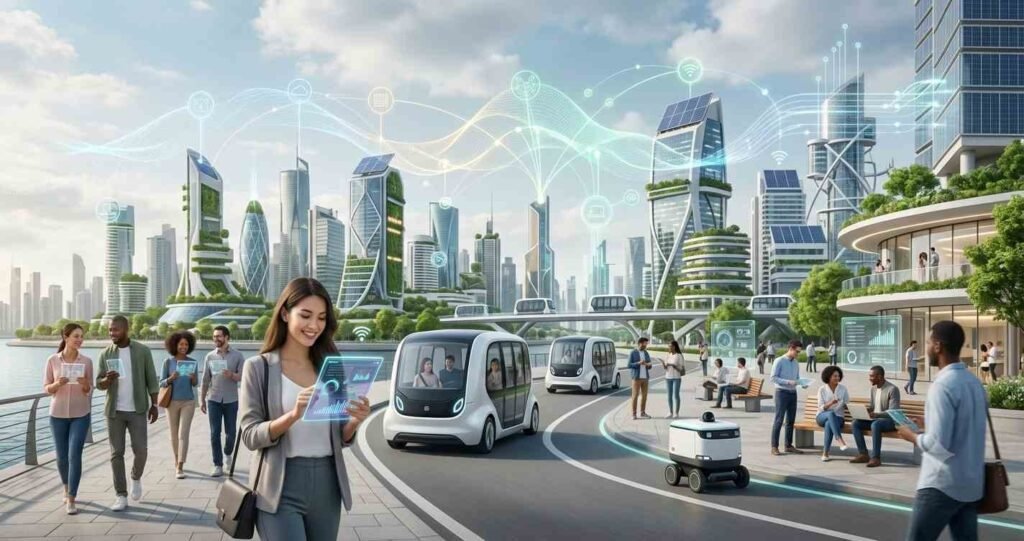
The future of AI and Digitalization will be shaped by faster automation, smarter systems, and deeper integration between humans and technology. As AI capabilities continue improving, businesses will move from simple automation toward intelligent decision-making environments.
Generative AI is expected to become a major business tool. Companies are already using AI systems to create content, analyze information, generate reports, and assist employees with daily tasks. Future developments will make these tools more accurate, personalized, and industry-specific.
Another important trend is the growth of autonomous systems. Businesses will increasingly use AI agents that can complete complex tasks, manage workflows, and make recommendations with limited human involvement.
Edge AI and connected devices will also expand. Instead of sending all data to centralized servers, smart devices will process information locally, improving speed and reducing dependency on traditional systems. This will benefit industries such as manufacturing, healthcare, and transportation.
Cybersecurity will become more intelligent as threats become more advanced. AI-powered security systems will continuously monitor digital environments and respond to attacks faster.
| Future Trend | Expected Impact |
| Generative AI | Faster content creation and automation |
| AI Agents | Intelligent workflow management |
| Edge AI | Faster real-time decision-making |
| Smart Devices | More connected business operations |
| AI Security | Stronger protection against cyber threats |
The organizations that successfully combine human creativity with AI capabilities will likely gain the strongest competitive advantage in the future digital economy.
Conclusion: Building a Smarter Digital Future
The rise of AI and Digitalization represents one of the most important technological shifts of the modern era. Businesses are moving beyond traditional digital systems and adopting intelligent solutions that can analyze information, automate processes, and improve decision-making.
From healthcare and finance to manufacturing, education, and retail, AI is creating opportunities for organizations to operate more efficiently and deliver better experiences. However, successful transformation requires careful planning, responsible implementation, and continuous learning.
Companies should focus on using AI as a tool to enhance human capabilities rather than replacing human expertise. The strongest results come when advanced technology works together with skilled teams, strategic thinking, and clear business goals.
As digital transformation continues, organizations that invest in intelligent systems today will be better prepared for tomorrow’s challenges. Building a smarter digital future is not only about adopting new technology; it is about creating flexible, innovative, and customer-focused businesses ready for continuous change.
FAQs
Q1: What is AI and Digitalization?
AI and Digitalization combine artificial intelligence with digital technologies to automate processes, analyze data, and improve business performance.
Q2: Why is AI important for digital transformation?
AI helps organizations make smarter decisions, automate repetitive tasks, improve customer experiences, and discover new growth opportunities.
Q3: What industries benefit most from AI adoption?
Healthcare, finance, manufacturing, retail, education, and transportation are among the industries experiencing major AI-driven improvements.
Q4: What are the biggest challenges of AI implementation?
Common challenges include data quality issues, cybersecurity risks, implementation costs, and employee adaptation.
Q5: What is the future of AI and Digitalization?
The future will include more advanced automation, AI agents, connected devices, and intelligent systems that support faster decision-making.