

The way businesses operate is changing faster than ever before. Traditional methods are no longer enough to handle growing customer expectations, massive amounts of data, and increasing market competition. This is where Smart Digital Technologies are creating a new era of innovation by combining artificial intelligence, automation, cloud computing, and connected systems to help organizations work smarter and faster.
From small businesses to global enterprises, companies are adopting intelligent digital solutions to improve decision-making, automate daily processes, and deliver better customer experiences. However, many organizations still struggle to understand which technologies truly create value and how they can use them effectively.
In this comprehensive guide, we will explore how Smart Digital Technologies are transforming modern industries, the key technologies behind this revolution, their major benefits, real-world applications, challenges, and future trends. Whether you are a business owner, technology professional, or simply interested in digital innovation, this article will help you understand how smart technologies are shaping the future of business growth.
What Are Smart Digital Technologies?
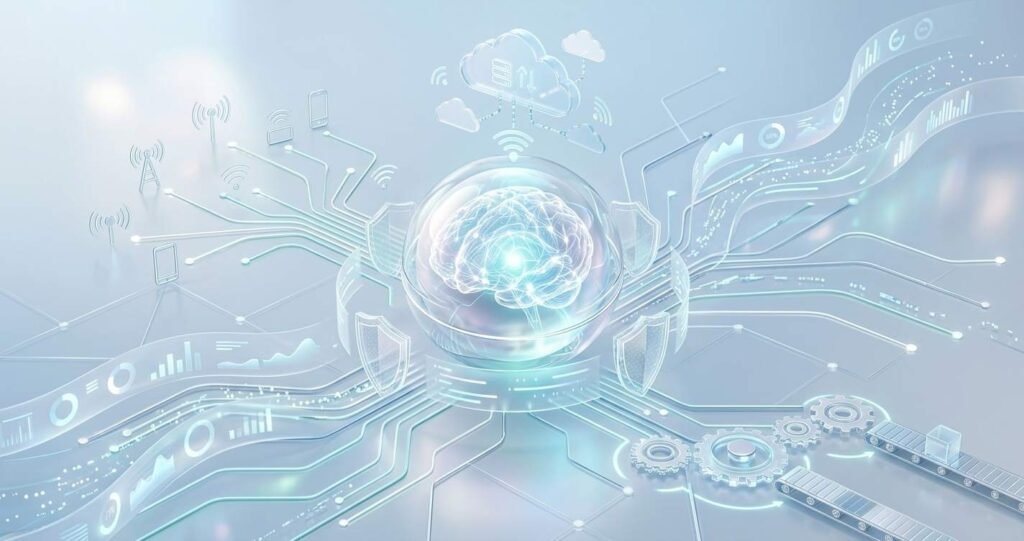
Smart Digital Technologies are advanced digital solutions that combine intelligent software, connected devices, automation, and real-time data to solve problems, improve efficiency, and support better decision-making. Instead of performing a single task, these technologies work together through systems such as artificial intelligence (AI), cloud computing, Internet of Things (IoT), big data analytics, blockchain, and machine learning. Their goal is to make businesses, industries, and everyday life more productive, accurate, and connected.
Today, Smart Digital Technologies are no longer limited to large enterprises. Small businesses, healthcare providers, schools, manufacturers, retailers, and even government organizations rely on them to streamline operations and deliver better experiences. For example, an online store can use AI to recommend products, while a factory can use IoT sensors to detect machine issues before they cause downtime. These practical applications show how Smart Digital Technologies work in real-world environments rather than existing as standalone innovations.
Another important aspect is their ability to process large volumes of information within seconds. Instead of waiting for manual reports, organizations receive real-time insights that help them respond quickly to customer demands, market changes, and operational challenges. This capability explains why Smart Digital Technologies examples are becoming common across almost every industry.
Unlike traditional digital tools that simply automate basic tasks, smart technologies continuously learn, adapt, and improve through data. Machine learning models become more accurate over time, cloud platforms make information accessible from anywhere, and connected devices communicate automatically without human intervention. Together, these capabilities create intelligent digital ecosystems that support long-term growth and innovation.
As businesses continue their digital transformation journey, understanding Smart Digital Technologies applications has become essential rather than optional. Organizations that adopt the right technologies gain better efficiency, stronger security, improved customer satisfaction, and a competitive advantage in rapidly changing markets. This growing importance is why Smart Digital Technologies have become one of the most discussed topics in business, technology, healthcare, education, and manufacturing.
Why Smart Digital Technologies Matter in Today’s World
The modern world generates enormous amounts of digital information every second. Businesses must analyze this data, make faster decisions, protect sensitive information, and meet rising customer expectations. This is exactly where Smart Digital Technologies make a significant difference by turning raw data into meaningful insights and automated actions.
Consumers now expect personalized services, instant communication, and seamless digital experiences. Smart technologies help organizations meet these expectations through AI-powered recommendations, automated customer support, predictive analytics, and cloud-based collaboration. These capabilities improve both operational efficiency and customer satisfaction without increasing manual workload.
One of the biggest reasons Smart Digital Technologies in business continue to grow is their ability to improve decision-making. Instead of relying on assumptions, companies can analyze customer behavior, monitor business performance in real time, and predict future trends using advanced analytics. This data-driven approach reduces risks while creating new opportunities for innovation.
Modern industries also face increasing cybersecurity threats, changing regulations, and intense global competition. Smart digital systems strengthen security through automated threat detection, identity management, and continuous monitoring. At the same time, cloud computing enables teams to collaborate securely from different locations, making hybrid and remote work more efficient than ever before.
The importance of Smart Digital Technologies for small businesses has also increased dramatically. Affordable cloud software, AI-powered marketing tools, and automation platforms allow startups to compete with much larger organizations without requiring massive technology budgets. This levels the playing field and encourages innovation across every business size.
Beyond business, these technologies improve healthcare through remote patient monitoring, education through personalized learning platforms, agriculture through precision farming, and transportation through intelligent traffic management. These real world Smart Digital Technologies examples demonstrate how digital innovation directly improves people’s daily lives while supporting sustainable economic growth.
As technology continues evolving, organizations that embrace smart digital solutions will be better prepared for future challenges, while those that delay adoption may struggle to remain competitive in an increasingly digital economy.
Key Types of Smart Digital Technologies
Understanding the types of Smart Digital Technologies helps organizations choose the right solutions for their goals. Although new innovations appear every year, several core technologies form the foundation of modern digital transformation.
Artificial Intelligence (AI) enables machines to analyze information, recognize patterns, generate predictions, and automate decision-making. AI powers virtual assistants, recommendation engines, fraud detection systems, and intelligent business analytics.
Internet of Things (IoT) connects physical devices through the internet, allowing them to collect and exchange data automatically. Smart factories, wearable health devices, connected vehicles, and intelligent home systems all depend on IoT technology.
Cloud Computing provides secure online access to software, storage, and computing resources without requiring expensive local infrastructure. It improves collaboration, scalability, disaster recovery, and remote accessibility for businesses of every size.
Big Data Analytics transforms massive datasets into meaningful business insights. Companies use analytics to understand customer behavior, forecast demand, optimize operations, and identify market opportunities with greater accuracy.
Machine Learning is a specialized branch of AI that enables systems to improve automatically through experience rather than relying solely on programmed instructions. It supports predictive maintenance, personalized marketing, financial forecasting, and medical diagnosis.
Blockchain Technology creates secure, transparent, and tamper-resistant digital records. Financial services, supply chain management, healthcare, and digital identity systems increasingly rely on blockchain to improve trust and data integrity.
Other emerging Smart Digital Technologies include robotic process automation (RPA), edge computing, cybersecurity platforms, augmented reality (AR), virtual reality (VR), digital twins, and 5G connectivity. These innovations work together instead of replacing one another, creating highly connected digital ecosystems.
Choosing the right technology depends on business objectives rather than following trends. Organizations that understand these core technologies can build stronger digital strategies, improve operational efficiency, and prepare for future technological advancements.

Top Benefits of Smart Digital Technologies
The benefits of Smart Digital Technologies extend far beyond automation. Their greatest value lies in helping organizations become faster, smarter, more secure, and better prepared for future growth while delivering improved customer experiences.
One major advantage is increased operational efficiency. Repetitive tasks such as data entry, inventory management, scheduling, and reporting can be automated, allowing employees to focus on innovation, creativity, and strategic decision-making. This improves productivity while reducing operational costs.
Another significant benefit is real-time decision-making. Smart technologies continuously collect and analyze information, giving managers immediate visibility into business performance. Instead of reacting after problems occur, organizations can identify risks early and respond proactively.
Customer experience also improves through personalized services powered by AI and analytics. Businesses understand customer preferences more accurately, recommend relevant products, provide faster support, and create highly customized digital experiences that strengthen long-term relationships.
Smart Digital Technologies in healthcare improve patient care through remote monitoring, AI-assisted diagnosis, electronic medical records, and predictive healthcare solutions. Similarly, Smart Digital Technologies in education support adaptive learning platforms, virtual classrooms, and personalized educational content that meets individual learning needs.
Cybersecurity becomes stronger with intelligent threat detection systems capable of identifying suspicious activities before they become serious security incidents. Automated monitoring, encryption, and identity verification further protect sensitive business information.
Perhaps the greatest long-term advantage is scalability. Cloud infrastructure, AI services, and automation platforms allow organizations to expand operations without making large investments in physical infrastructure. This flexibility helps businesses adapt quickly as markets evolve.
Overall, future of Smart Digital Technologies points toward even greater integration between AI, IoT, cloud computing, blockchain, and advanced analytics. Organizations that invest in these technologies today position themselves for sustainable growth, stronger competitiveness, continuous innovation, and long-term digital success.
Also Read: AI and Digitalization: Transforming Businesses Through Intelligent Innovation Today
Real-World Applications Across Different Industries
The impact of Smart Digital Technologies can be seen across almost every industry today. These technologies are helping organizations improve efficiency, reduce costs, automate processes, and create better experiences for customers. From healthcare and manufacturing to education and retail, smart solutions are changing how businesses operate and deliver value.
In healthcare, Smart Digital Technologies are improving patient care through AI-powered diagnosis, remote health monitoring, electronic medical records, and predictive analytics. Doctors can analyze patient information faster, while wearable devices collect real-time health data to identify potential issues before they become serious. These innovations are making healthcare more personalized, accessible, and efficient.
The manufacturing sector is also experiencing major transformation through Smart Digital Technologies in manufacturing. Smart factories use IoT sensors, robotics, automation, and digital twins to monitor production processes. For example, connected machines can detect performance issues and predict maintenance requirements before equipment failure occurs. This reduces downtime and increases productivity.
In education, Smart Digital Technologies in education are creating flexible and personalized learning experiences. Online learning platforms, AI-based tutoring systems, virtual classrooms, and digital assessment tools help students learn according to their individual needs. Teachers can also use analytics to understand student performance and improve teaching strategies.
Retail and e-commerce businesses use smart technologies to understand customer behavior and provide personalized shopping experiences. AI recommendation systems, automated customer support, inventory prediction, and smart payment solutions help companies increase customer satisfaction and improve sales performance.
Agriculture is another important area where smart technology is creating significant changes. Farmers use IoT sensors, satellite data, drones, and AI analytics for precision farming. These solutions help monitor soil conditions, optimize water usage, and improve crop productivity.
| Industry | Smart Technology Used | Main Benefits |
| Healthcare | AI, IoT Devices, Predictive Analytics | Better diagnosis and patient monitoring |
| Manufacturing | Robotics, Digital Twins, IoT Sensors | Higher productivity and reduced downtime |
| Education | AI Learning Platforms, Cloud Tools | Personalized learning experiences |
| Retail | AI Recommendations, Data Analytics | Improved customer engagement |
| Agriculture | Sensors, Drones, Smart Farming Tools | Better resource management |
These Smart Digital Technologies examples show that digital innovation is not limited to one sector. Instead, it creates connected ecosystems where data, automation, and intelligence work together to solve real-world problems.
How Smart Digital Technologies Are Transforming Businesses
Modern businesses are facing increasing pressure to become faster, more customer-focused, and more adaptable. Smart Digital Technologies are helping companies achieve these goals by combining automation, artificial intelligence, analytics, and connected systems into powerful business solutions.
One of the biggest transformations is the shift from traditional decision-making to data-driven strategies. In the past, businesses often depended on historical reports and manual analysis. Today, companies use big data analytics and AI tools to understand customer behavior, predict market trends, and make faster decisions based on real-time information.
Automation is another major advantage of Smart Digital Technologies in business. Tasks such as customer support, financial reporting, inventory management, and marketing optimization can now be handled through intelligent systems. This allows employees to focus on higher-value activities like creativity, strategy, and relationship building.
Smart technologies are also changing customer experiences. Businesses can use AI chatbots, recommendation engines, personalized marketing campaigns, and predictive analytics to provide services that match customer expectations. A customer today expects speed, personalization, and convenience, and smart digital solutions make this possible.
Cloud computing has also transformed the way companies operate. Businesses no longer need expensive physical infrastructure to scale their operations. Cloud platforms provide flexible resources, secure storage, and remote collaboration capabilities that support modern work environments.
| Traditional Business Approach | Smart Digital Technology Approach |
| Manual data analysis | AI-powered real-time insights |
| Reactive problem solving | Predictive solutions |
| Fixed infrastructure | Flexible cloud-based systems |
| Generic customer experience | Personalized digital experiences |
| Time-consuming processes | Automated workflows |
Small and medium-sized businesses are also benefiting from these advancements. Affordable AI tools, cloud applications, and automation platforms allow smaller companies to compete with larger enterprises. This accessibility makes digital transformation possible for businesses of all sizes.
The future of business success will depend on how effectively organizations integrate these technologies into their operations. Companies that use Smart Digital Technologies strategically can improve efficiency, reduce costs, increase customer loyalty, and build a stronger position in competitive markets.
Common Challenges and Future Trends
Although Smart Digital Technologies offer many advantages, their implementation also comes with challenges. Businesses need careful planning, skilled professionals, and strong security strategies to achieve successful digital transformation.
One of the biggest challenges is cybersecurity. As organizations connect more devices and collect larger amounts of data, the risk of cyber threats increases. Companies must invest in advanced security systems, encryption methods, and continuous monitoring to protect sensitive information.
Another challenge is the cost of adoption. While many smart solutions have become more affordable, implementing advanced technologies such as AI systems, IoT networks, and automation platforms may require significant investment. Businesses need to evaluate their goals and choose technologies that provide measurable value.
Employee skills and training are also important factors. New technologies often change existing workflows, and employees need proper knowledge to use these systems effectively. Organizations that focus on digital skills development usually experience smoother technology adoption.
| Challenge | Possible Solution |
| Data security risks | Advanced cybersecurity and monitoring |
| High implementation costs | Gradual technology adoption strategy |
| Lack of technical skills | Employee training and development |
| Integration problems | Modern infrastructure planning |
| Privacy concerns | Strong data governance policies |
Looking ahead, the future of Smart Digital Technologies will be shaped by deeper integration between AI, IoT, cloud computing, and automation. Generative AI will continue improving business productivity, while digital twins will help companies simulate and optimize real-world operations before making changes.
Edge computing is also expected to grow because it allows data processing closer to the source, improving speed and reducing dependency on centralized systems. Meanwhile, advanced cybersecurity solutions will become more important as digital ecosystems expand.
Businesses will increasingly move toward intelligent automation, where systems do not just follow instructions but analyze situations, learn from data, and recommend better decisions. Smart cities, autonomous systems, personalized healthcare, and intelligent manufacturing will continue expanding as these technologies mature.
The organizations that successfully balance innovation, security, and human expertise will gain the strongest advantage. Smart Digital Technologies are not simply future concepts; they are becoming essential tools for building efficient, connected, and competitive businesses.