Technology has changed far beyond the simple use of computers. Today, businesses, schools, banks, healthcare providers, and everyday users depend on connected systems to store information, process data, communicate, automate tasks, and make faster decisions. Digital Information Technology brings these capabilities together through hardware, software, networks, cloud platforms, databases, cybersecurity, and emerging technologies such as artificial intelligence. But understanding how all these pieces work together can be confusing, especially as digital systems continue to evolve.
In 2026, Digital Information Technology is becoming more intelligent, connected, and automated. AI-powered systems, cloud computing, real-time data, cybersecurity, and digital automation are changing how information moves through modern organizations. This guide breaks down how Digital Information Technology works in simple terms, explains its core components and practical uses, and explores the major developments shaping its future. Whether you are a student, business owner, professional, or simply curious about modern technology, you will find a clear and practical explanation of how digital information moves from raw data to useful results.
What Is Digital Information Technology?
Digital Information Technology (DIT) refers to the use of digital systems, devices, software, networks, and data technologies to create, process, store, retrieve, share, and protect information. In simple terms, it is the technology ecosystem that helps people and organizations turn digital data into useful information and make that information available when and where it is needed.
Unlike the old idea that information technology is simply about computers, modern Digital Information Technology involves a much wider environment. A smartphone, cloud platform, business database, Wi-Fi network, cybersecurity system, collaboration application, and even connected IoT device can all play a role in digital information management.
For example, when a customer places an order through an online store, several digital technologies work together. The website receives the order, software processes it, a database stores customer and payment information, a network transfers the data, and security controls help protect sensitive details. The customer may only see a confirmation screen, but a complete digital information system is working behind it.
Digital Information Technology Meaning in Simple Terms
The easiest way to understand the digital information technology definition is to think about the journey of information:
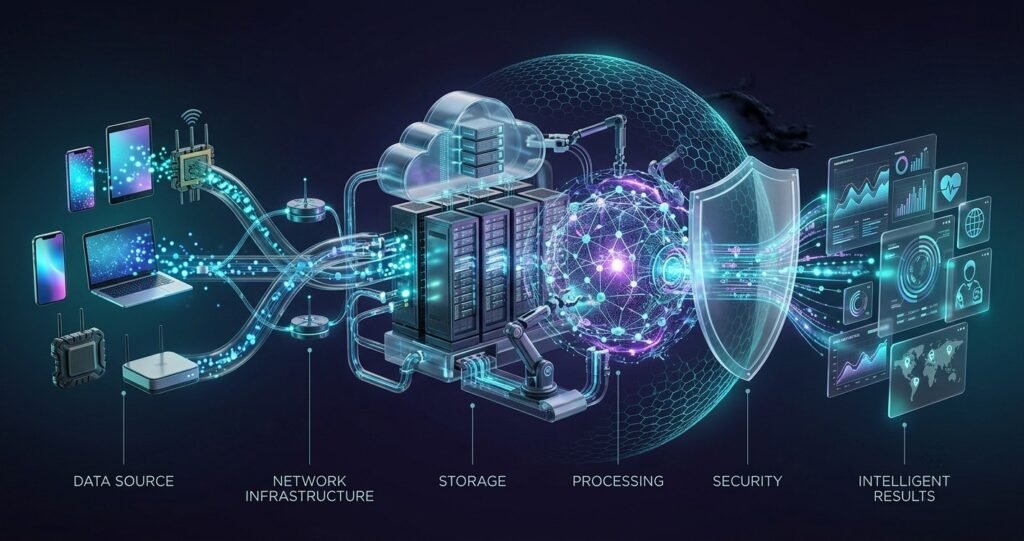
Data → Processing → Storage → Communication → Security → Useful Information
Raw data has little value until a system can organize and process it. Once processed, it can help a business understand customers, manage inventory, automate repetitive tasks, or make better decisions.
This is why DIT connects closely with areas such as information technology systems, digital technology, data management, cloud computing, and cybersecurity.
The concept is also broader than one particular device or application. IEEE describes IT as the combination of hardware, software, networks, and management practices used to create, process, store, secure, and exchange digital information.
Why Does Digital Information Technology Matter?
Modern organizations depend on fast and reliable information. A business may need real-time sales data, employees may need cloud documents, and customers may expect instant digital support.
Digital Information Technology connects these activities.
It can improve communication, automate routine work, support data-driven decisions, and make information accessible across locations. In education, for example, digital platforms allow students to access learning resources remotely. In healthcare, digital records and connected systems can help professionals manage information more efficiently.
How Does Digital Information Technology Work?
Understanding how Digital Information Technology works becomes much easier when you look at it as a continuous flow of information rather than as a collection of separate devices.
At a basic level, a digital system receives data, processes it through hardware and software, stores the result, transfers information through networks, and applies security controls throughout the process. This basic cycle appears in everything from a smartphone application to a large enterprise IT environment.
Step 1: Data Is Collected
Every digital process starts with an input. This could be a customer entering an email address, an employee uploading a document, a sensor measuring temperature, or a payment terminal recording a transaction.
The information may begin as raw data, but it becomes useful only after a system processes it.
Step 2: Software Processes the Data
Software provides instructions that tell a device or system what to do with the incoming data.
For example, an e-commerce platform can calculate an order total, check inventory, apply a discount, and generate an invoice automatically.
This is where applications, operating systems, databases, and other software tools become essential.
Step 3: Information Is Stored
Digital information needs somewhere to remain available.
It can be stored on a computer, server, database, storage device, or cloud platform. Modern cloud computing allows organizations to access computing resources, databases, storage, applications, and networking services through the internet rather than relying entirely on physical infrastructure.
Step 4: Networks Move the Information
Networks connect users, devices, applications, and servers.
When you send a message, open a website, access a cloud file, or make an online payment, network infrastructure moves information between different systems.
This is why communication networks are a fundamental part of digital information technology systems.
Step 5: Security Protects the Process
Information cannot simply move around without protection.
Cybersecurity measures such as authentication, encryption, access controls, firewalls, backups, and monitoring help reduce the risk of unauthorized access, data loss, and system disruption.
A Simple Example
Imagine ordering food through an app:
You place the order → the app processes it → the database records it → the network sends the request → the restaurant receives it → the system updates the order status.
That entire chain demonstrates how Digital Information Technology works in everyday life.
Core Components of Digital Information Technology
The core components of Digital Information Technology work together as an interconnected system. Removing one important layer can affect the performance, security, or usefulness of the entire environment.
Modern IT infrastructure commonly includes hardware, software, networks, data resources, cloud services, and security controls.
1. Hardware
Hardware includes the physical equipment used to collect, process, store, or communicate information.
Examples include:
- Computers and laptops
- Smartphones and tablets
- Servers
- Storage devices
- Routers and switches
- Printers
- Sensors and IoT devices
A processor performs calculations, memory supports active operations, and storage keeps digital information available for later use.
2. Software
Hardware needs software to perform useful tasks.
Software includes operating systems, mobile applications, business platforms, database systems, productivity tools, and specialized programs.
For example, an operating system manages the device, while an application may help a business manage customers or analyze sales data.
3. Networks
Networks allow devices and systems to communicate.
Local networks, Wi-Fi, mobile networks, fiber connections, and the internet provide different ways to transfer digital information.
Without networking, many modern digital services would operate as isolated systems rather than connected platforms.
4. Data and Databases
Data is the material that digital systems process.
Databases organize information so that applications can store, search, update, and retrieve it efficiently. Businesses may use databases for customers, orders, products, employees, financial records, and analytics.
This makes data management one of the most important parts of modern digital infrastructure.
5. Cloud Computing
Cloud technology provides computing resources over the internet.
Instead of maintaining every server locally, organizations can use cloud-based storage, databases, software, networking, and computing services. Common service models include IaaS, PaaS, and SaaS.
6. Cybersecurity
Security protects digital systems and information from unauthorized access, attacks, loss, and misuse.
Encryption, authentication, firewalls, backups, access management, and security monitoring can all form part of an organization’s cybersecurity strategy.
Together, these components create the foundation of Digital Information Technology and allow digital services to operate reliably.
How Digital Information Technology Is Used
The real value of Digital Information Technology becomes clear when you look at how people and organizations use it every day. DIT is not limited to technology companies. Its applications extend across business, education, healthcare, finance, manufacturing, government, communication, and entertainment.
Digital Information Technology in Business
Businesses use digital systems to manage operations, customers, employees, transactions, and data.
A company might use a CRM to organize customer relationships, an ERP platform to manage internal processes, cloud software for collaboration, and analytics tools to understand performance.
For example, an online retailer can connect its website, inventory database, payment system, customer service platform, and analytics dashboard. This reduces manual work and gives employees a more complete view of the business.
This is also where business information technology becomes important. It applies digital systems specifically to business operations, automation, communication, and value creation.
If you are researching and explaining business policy, it is useful to understand that technology can support policies through access controls, approval workflows, record keeping, compliance systems, and automated processes.
Digital Information Technology in Education
Schools and universities use learning management systems, video platforms, digital libraries, online assessments, and collaboration software.
Students can access educational material remotely, communicate with instructors, submit assignments, and participate in virtual learning environments.
Digital Information Technology in Healthcare
Healthcare organizations use electronic health records, digital imaging, telemedicine platforms, patient-management systems, and connected medical technologies.
These tools help professionals store and access information while supporting communication between different parts of a healthcare organization.
DIT in Finance
Banks and financial companies depend heavily on digital infrastructure.
Online banking, mobile payments, fraud detection, automated transactions, customer databases, and real-time financial systems all rely on information technology.
DIT in Manufacturing
Manufacturers can combine sensors, databases, automation, analytics, and connected machines to monitor production and manage supply chains.
This is closely related to smart manufacturing and the Internet of Things.
Why These Applications Matter
Across industries, the goal is similar: move the right information to the right person or system at the right time.
That makes DIT an enabling layer rather than a single product or service.
Benefits of Digital Information Technology
The benefits of Digital Information Technology go beyond simply replacing paper records with digital files. When implemented properly, digital systems can change how an organization communicates, operates, analyzes information, and serves its customers.
1. Faster Access to Information
Digital systems allow authorized users to retrieve information quickly.
Instead of searching through physical documents, an employee can search a database, cloud platform, or document-management system within seconds.
This becomes especially valuable when an organization handles thousands or millions of records.
2. Better Communication and Collaboration
Email, instant messaging, video conferencing, project-management platforms, and cloud collaboration tools allow teams to work together across different locations.
Modern IT infrastructure supports communication and collaboration as a core business function.
3. Improved Productivity
Automation can reduce repetitive manual tasks.
For example, software can automatically send invoices, update inventory records, generate reports, schedule notifications, or route customer requests.
Employees can then spend more time on tasks that require judgment and creativity.
4. Stronger Data-Driven Decisions
Digital systems make it easier to collect and analyze business information.
A company can examine sales patterns, customer behavior, website activity, operational performance, and inventory data before making decisions.
This moves decision-making away from guesswork and toward measurable evidence.
5. Greater Scalability
Cloud computing allows businesses to increase or reduce computing resources as their requirements change.
A growing company does not necessarily need to purchase and maintain every piece of infrastructure itself. Cloud services can provide computing, storage, networking, and software resources on demand.
6. Better Customer Experiences
Digital platforms can make services faster and more convenient.
Customers can order products online, track deliveries, access support, receive personalized recommendations, and communicate with businesses through digital channels.
7. Improved Security and Control
Modern cybersecurity tools can help organizations control who can access sensitive information and monitor suspicious activity.
However, technology alone does not guarantee security. Strong policies, employee awareness, regular updates, backups, and appropriate access controls are equally important.
8. Supports Innovation
Perhaps the biggest long-term benefit is that digital infrastructure creates a foundation for newer technologies.
AI, machine learning, IoT, advanced analytics, automation, and cloud-native applications can build on existing digital systems.
That is why Digital Information Technology remains central to modern digital transformation rather than being simply another name for computers or software.
Also Read: Digital Marketing for Technology Companies: A 2026 Guide
Benefits of Digital Information Technology
The biggest advantage of Digital Information Technology is not simply that it makes information digital. Its real value comes from making information easier to access, process, protect, analyze, and use. Modern organizations rely on interconnected hardware, software, networks, databases, and cloud services to keep daily operations moving.
Faster Access to Information
Digital systems allow authorized users to find information within seconds. A company can search customer records, invoices, product information, or reports without manually checking physical documents. This makes digital information technology systems particularly useful for organizations that handle large volumes of data.
Better Productivity and Automation
Automation is another major benefit. Software can generate reports, update records, send notifications, process transactions, and organize repetitive workflows automatically.
For example, an online store can automatically reduce inventory after a purchase. The customer receives an order confirmation, the warehouse receives an update, and the accounting system can record the transaction without employees entering the same information several times.
Stronger Decision-Making
Businesses can use data management and analytics tools to turn raw information into useful insights. Instead of relying entirely on assumptions, managers can examine sales patterns, customer behavior, operational performance, and financial information before making decisions.
This makes digital information technology in business closely connected with data-driven decision-making.
Improved Communication
Cloud platforms, messaging applications, video conferencing, and collaboration software allow teams to communicate across offices and countries. Information can be shared almost instantly, making remote and hybrid work much easier.
Scalability and Flexibility
Cloud computing gives organizations access to storage, computing power, applications, and networking resources without requiring every resource to be maintained locally. This can help growing companies expand their technology infrastructure more efficiently.
Better Security and Control
Modern cybersecurity tools can provide authentication, encryption, access management, monitoring, and backup capabilities. However, security depends on more than technology. Strong policies, employee training, software updates, and appropriate access controls must work alongside technical safeguards.
Support for Innovation
The same infrastructure can support AI, IoT, automation, advanced analytics, and other emerging technologies. This makes Digital Information Technology a foundation for digital transformation rather than simply a collection of computer tools.
Digital Information Technology vs. Traditional IT
The difference between Digital Information Technology and Traditional IT is not always a strict technical boundary. In fact, researchers note that “digital” and “IT” are sometimes treated as synonymous and sometimes as distinct concepts.
A better way to understand the difference is to compare their focus, architecture, connectivity, automation, and business role.
| Area | Traditional IT | Modern Digital Information Technology |
| Main focus | Managing technology and information systems | Connecting technology, information, data, and digital experiences |
| Infrastructure | Often on-premises | Cloud, hybrid, and distributed environments |
| Data | Primarily stored and processed in organizational systems | Real-time, connected, and increasingly AI-ready |
| Automation | Rule-based automation | AI-assisted and intelligent automation |
| Connectivity | Internal networks and conventional internet services | Cloud, IoT, APIs, mobile and connected ecosystems |
| Security | Perimeter-focused controls | Identity, data, application, cloud, and AI security |
| Business role | Technology support | Technology as a strategic business capability |
Traditional information technology remains essential. Computers, servers, networks, databases, operating systems, and software still form the foundation of digital services. Cisco, for example, describes IT around computer systems, hardware, software, and networks involved in processing and distributing data.
The difference is that modern digital environments connect these components much more closely with customers, employees, business processes, cloud platforms, and intelligent applications.
Why the Difference Matters
Consider a traditional company database. It may store customer information for employees to access.
A modern digital environment can connect that same customer data with a website, mobile application, CRM, analytics platform, recommendation engine, customer-support system, and AI assistant.
The technology is no longer operating in isolation.
This is why digital information technology systems increasingly emphasize integration and real-time information flow.
It is also important not to describe traditional IT as obsolete. Organizations still need reliable infrastructure, technical support, networking, system administration, and cybersecurity. Modern digital technology builds on these foundations rather than simply replacing them.
Digital Information Technology in 2026
In 2026, Digital Information Technology is moving from simple digitization toward intelligent, connected, and increasingly automated systems.
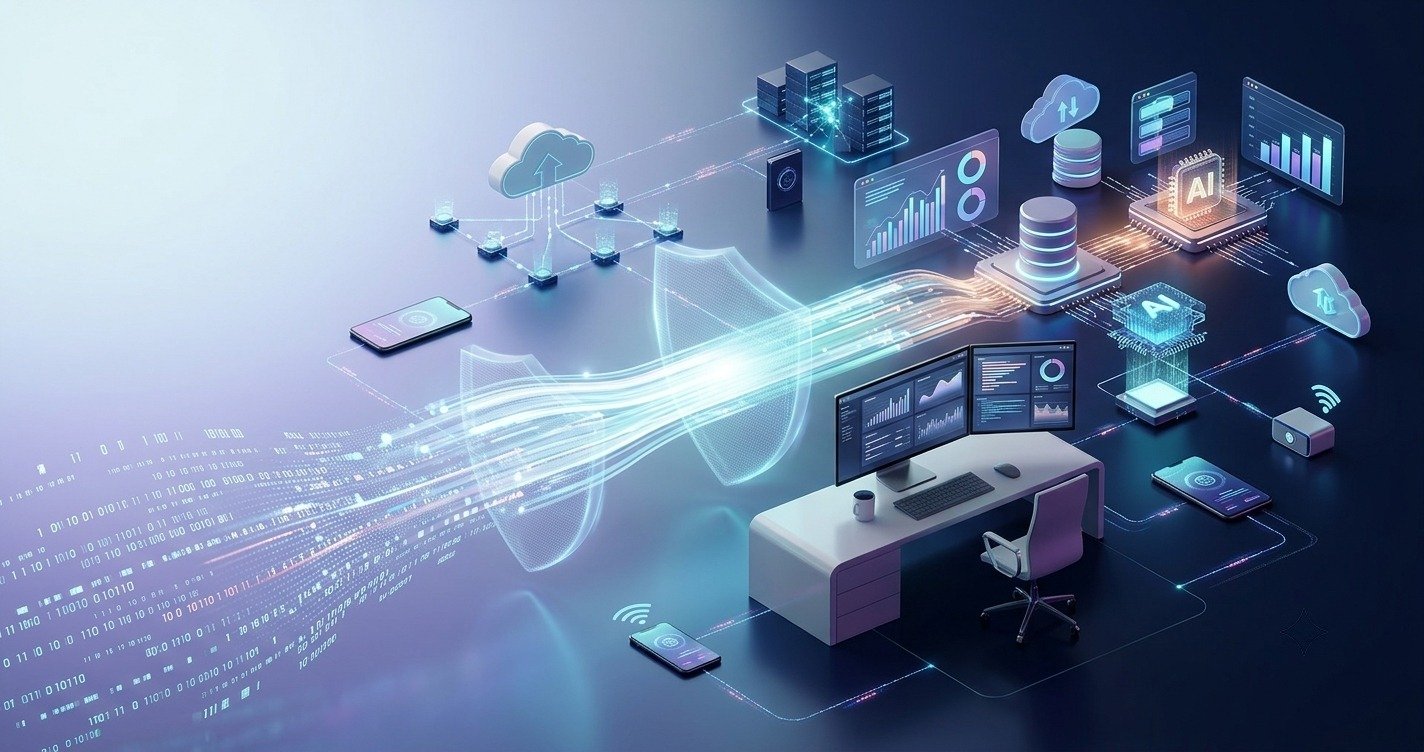
The major shift is not just the arrival of another new device or application. Businesses are combining AI, cloud computing, cybersecurity, data platforms, automation, and connected devices into integrated technology environments.
Modern Digital Information Technology relies on connected technologies such as cloud computing, networking, IoT, cybersecurity, and data systems. NIST Information Technology Resources
AI Is Becoming Part of Everyday IT
Artificial intelligence is now moving deeper into business workflows. IEEE’s 2026 technology predictions identify AI agents as a major development, particularly for automating repetitive and routine work.
At the same time, Gartner’s 2026 technology trends highlight AI-native development platforms, AI supercomputing, multi-agent systems, domain-specific language models, and physical AI.
This means future digital information technology systems will increasingly be designed to work with AI rather than simply provide data to human users.
Cybersecurity Is Becoming More Proactive
Security is another major 2026 priority.
AI is changing both sides of cybersecurity. Organizations are using AI to improve detection and response, while attackers can also use AI to increase the speed and sophistication of attacks. The World Economic Forum describes this as a major shift in the cybersecurity landscape.
As a result, businesses are paying greater attention to identity management, data protection, AI security, continuous monitoring, and security governance.
Cloud and Hybrid Infrastructure
Cloud computing remains a core part of modern digital information technology. However, organizations are increasingly choosing infrastructure based on performance, cost, security, regulatory requirements, and workload needs rather than following a simple “everything in the cloud” approach.
Connected Devices and IoT
IoT allows physical devices to collect and exchange information. Sensors, industrial machines, vehicles, smart equipment, and consumer devices can generate continuous streams of data.
The 2026 Direction
The strongest trend is convergence.
AI + Cloud + Data + Automation + Cybersecurity + Connectivity
Together, these technologies are creating more intelligent and responsive digital environments.
The Future of Digital Information Technology
The future of Digital Information Technology will be shaped less by individual technologies and more by how different systems work together.
AI will continue to become more deeply embedded in software, business processes, cybersecurity, analytics, and digital services. Gartner’s 2026 technology outlook already points toward multi-agent systems, physical AI, AI-native development, confidential computing, and AI security platforms.
AI Agents and Intelligent Automation
One of the most important developments is the movement from AI that simply answers questions toward AI systems that can perform tasks.
An AI agent could potentially analyze information, interact with software, complete routine workflows, and coordinate with other digital systems under defined permissions.
However, organizations will need clear governance and human oversight, particularly when AI can make decisions or take actions independently.
More Intelligent Data Systems
Future digital platforms will increasingly depend on high-quality, well-structured data.
AI systems cannot produce reliable business outcomes from poorly managed information. This makes data quality, databases, data governance, privacy, and information architecture increasingly important.
Stronger Digital Security
Security will also move closer to the center of technology design.
Instead of protecting only a company’s network perimeter, future security strategies will need to protect identities, applications, cloud environments, AI models, data, connected devices, and digital supply chains.
Gartner’s 2026 trends specifically identify preemptive cybersecurity, digital provenance, and AI security platforms as important developments.
Human Skills Will Still Matter
More automation does not mean technology will eliminate the need for people.
Organizations will still need professionals who understand cybersecurity, data analysis, system architecture, business processes, ethics, governance, and technology strategy.
The strongest teams will combine machine capabilities with human judgment.
What Businesses Should Prepare For
Businesses preparing for the future of digital information technology should focus on four foundations:
- Reliable data infrastructure
- Secure and scalable cloud systems
- Responsible AI adoption
- Continuous cybersecurity and governance
The goal should not be adopting every new technology. A better approach is choosing technologies that solve a measurable problem and integrating them into a reliable digital ecosystem.
In the coming years, digital information technology trends will increasingly revolve around intelligent automation, connected systems, secure AI, real-time data, and human-machine collaboration.