Artificial intelligence is changing the way people create and edit digital content. Tasks that once required professional photography equipment, advanced editing software, and hours of manual work can now be completed with simple AI-powered tools. From making pictures speak to generating original artwork and changing outfits in photographs, modern AI applications are making digital creativity easier and more accessible.
Three technologies gaining attention are talking photo AI AI image generator tools, and AI clothes changer applications. Each offers different creative possibilities, allowing users to transform ordinary images into engaging visual content. Whether someone is a content creator, digital marketer, designer, or casual user, these tools can help turn creative ideas into impressive results.
Understanding Talking Photo AI Technology
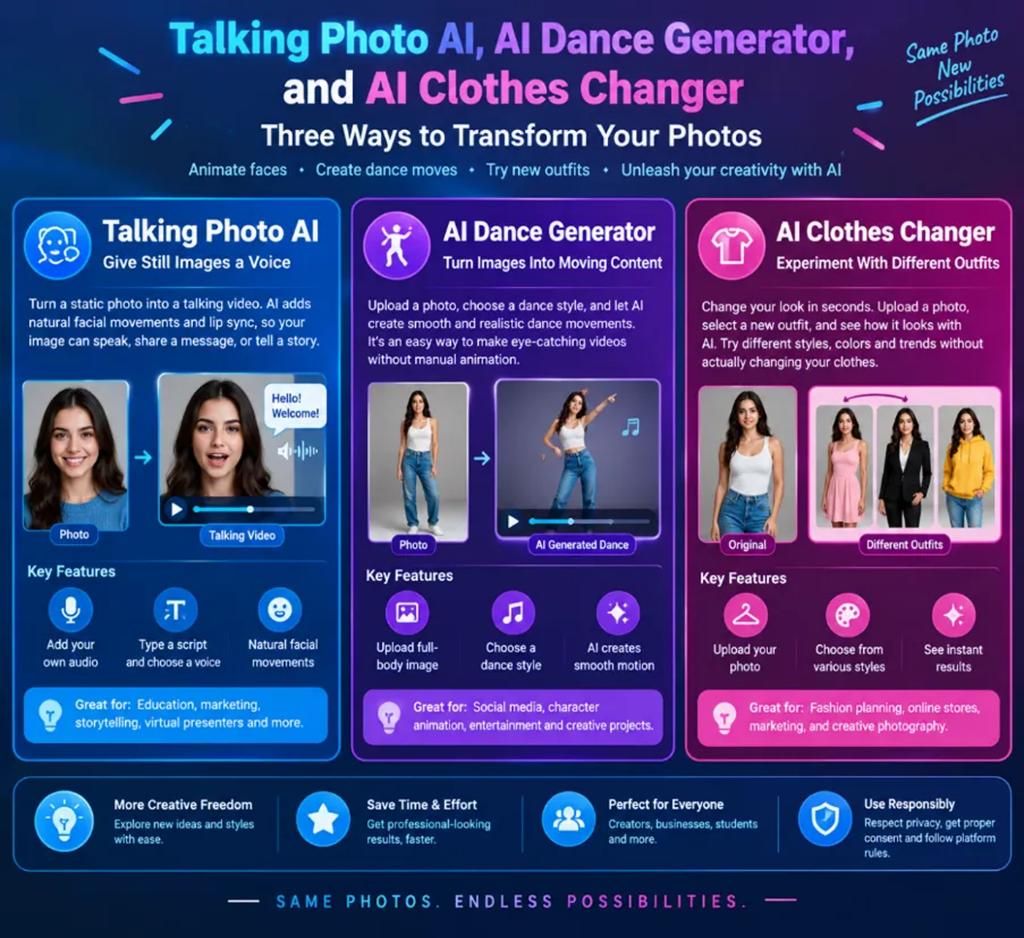
Talking photo AI is an innovative technology that transforms a still photograph into an animated talking character. Instead of showing a motionless portrait, users can make a person’s face appear to speak using a written script or recorded audio.
The technology uses artificial intelligence to analyze facial features, identify important points around the mouth, eyes, and face, and generate realistic movements. When audio is provided, the system synchronizes facial expressions and lip movements with the spoken words.
This technology has several practical applications. Businesses can create digital presenters for promotional videos, teachers can develop more engaging learning materials, and social media creators can produce entertaining content without recording themselves on camera.
For example, someone running an educational channel can use a portrait to create a virtual presenter that explains complicated topics. Similarly, businesses can introduce products through animated characters instead of arranging expensive video shoots.
The quality of the final result depends on image resolution, facial visibility, audio clarity, and the AI model being used. A clear, front-facing photograph generally produces better animation than an image with unusual angles or poor lighting.
Exploring the Possibilities of an AI Image Generator
An AI image generator allows users to create original pictures from written descriptions. Rather than drawing everything manually, users simply explain what they want, and artificial intelligence produces an image based on their instructions.
For instance, a user might enter a prompt describing a futuristic city, a beautiful landscape, a professional business portrait, or a colorful fantasy character. The system interprets the description and generates a visual representation.
These tools are especially useful for people who need original graphics but do not have professional design experience. Bloggers can create featured images, marketers can develop advertising concepts, and social media managers can prepare attractive visual posts.
Another advantage is creative flexibility. Users can experiment with different artistic styles, including realistic photography, digital illustrations, cartoons, watercolor paintings, and cinematic visuals.
An effective prompt usually includes several important details:
- Main subject: Describe the person, object, or environment.
- Visual style: Mention whether the image should look realistic, artistic, or animated.
- Background: Explain the surroundings and setting.
- Lighting: Include details about brightness, shadows, and atmosphere.
- Composition: Describe the desired camera angle and image arrangement.
For example, instead of writing “a beautiful house,” users can describe a modern luxury home surrounded by green gardens, photographed during golden hour with realistic architectural details.
More descriptive instructions generally help AI systems understand the intended result.
What Is an AI Clothes Changer?
An AI clothes changer is a digital editing solution that allows users to modify clothing in photographs without manually replacing every part of an outfit.
Traditional photo editing often requires advanced skills, especially when changing clothes while maintaining natural shadows, body proportions, fabric details, and lighting. AI-powered editing simplifies this process by identifying clothing areas and generating alternative outfit designs.
Depending on the platform, users may upload a photograph and select a clothing category, provide a reference outfit, or describe the appearance they want.
For example, someone could preview how a formal suit, casual jacket, traditional outfit, or summer dress might look in a photograph. The AI then attempts to generate a realistic clothing variation while preserving the original image’s overall composition.
This technology is particularly valuable for fashion businesses. Online stores can use virtual outfit previews to demonstrate different styles, while designers can experiment with clothing concepts before producing physical samples.
Fashion influencers can also explore different visual themes and prepare content for their audiences.
However, results are not always perfect. Complex patterns, overlapping accessories, unusual poses, and poorly lit photographs may produce visual inconsistencies. Reviewing the final image is important before using it commercially.
How These Three AI Technologies Work Together
Although talking photo AI, image generation, and clothing replacement serve different purposes, they can complement one another in a single creative workflow.
Imagine a fashion brand preparing a promotional campaign. First, an AI image generator can help create an attractive background or visual concept. Next, an AI clothes changer can help demonstrate different fashion combinations using suitable photographs. Finally, talking photo AI can transform a portrait into a virtual presenter that introduces the collection.
This workflow can reduce production time and provide more creative flexibility.
Content creators can follow a similar approach when preparing educational videos, product demonstrations, entertainment posts, or promotional campaigns.
Instead of depending entirely on traditional photography and video production, users can combine several AI technologies to develop visual content more efficiently.
Benefits of Using AI-Powered Creative Tools
AI creative applications offer several advantages for individuals and businesses.
1. Faster Content Creation
Creating images and editing photographs manually can take considerable time. AI tools automate many repetitive tasks, allowing users to complete projects more quickly.
2. Beginner-Friendly Experience
Many platforms provide simple interfaces that do not require advanced graphic design or video editing knowledge. Users can experiment with creative ideas through prompts, uploaded photographs, and ready-made templates.
3. More Creative Opportunities
Artificial intelligence makes it easier to explore different visual concepts. Users can generate multiple versions of an image, test different clothing styles, or experiment with animated presentations.
4. Reduced Production Costs
Small businesses and independent creators may not have the budget for professional photography sessions or extensive editing services. AI tools can provide affordable alternatives for certain creative projects.
5. Flexible Content Production
The same basic photograph or creative concept can be adapted for different platforms and audiences. This flexibility is particularly helpful for businesses producing regular marketing materials.
Important Things to Consider Before Using AI Tools
Despite their advantages, AI-generated content requires responsible use. Users should understand how their chosen platform handles uploaded photographs, audio recordings, and personal information.
Privacy should be a priority, particularly when working with pictures of other people. Always obtain appropriate permission before animating someone’s photograph or modifying their appearance.
It is also important to review platform policies regarding commercial usage. Some services offer different licensing conditions depending on subscription plans, image ownership, and intended applications.
Another consideration is authenticity. AI-generated photographs and animations can sometimes appear convincing even when they do not represent real events. Creators should avoid using manipulated images to mislead audiences or misrepresent individuals.
Finally, users should compare different platforms before selecting one. Image quality, processing speed, available editing features, export resolution, and pricing can vary significantly.
The Future of AI-Powered Digital Creativity
The development of artificial intelligence is creating new opportunities across photography, fashion, advertising, education, and entertainment.
Future talking photo AI systems may deliver more natural expressions, improved voice synchronization, and realistic head movements. AI image generator technology will likely continue improving its understanding of detailed prompts, complex compositions, and artistic instructions.
Similarly, AI clothes changer applications may provide more accurate fabric textures, improved outfit fitting, and better virtual fashion previews.
These improvements could make AI-powered creativity an increasingly important part of everyday digital production.
However, human creativity will remain valuable. AI can generate images and automate editing, but people still need to develop ideas, choose appropriate styles, review results, and communicate meaningful messages.
Conclusion
Talking photo AI, AI image generator applications, and AI clothes changer tools are making digital content creation more accessible. They offer practical solutions for animating portraits, producing original artwork, and exploring different clothing styles without complicated editing processes.
For businesses, these technologies can support marketing campaigns and product presentations. For individual creators, they provide new ways to experiment with visual storytelling.
As AI technology continues developing, combining these tools can help users create engaging digital experiences while saving time and expanding their creative possibilities. The key is to use them thoughtfully, respect privacy, and maintain quality throughout the creative process.