Search engines are no longer the only places where people discover businesses, products, and services. Many users now ask ChatGPT, Gemini, Perplexity, and other AI assistants for recommendations instead of opening several websites and comparing results themselves. This change has created a new area of SEO called AI search visibility or Generative Engine Optimization (GEO).
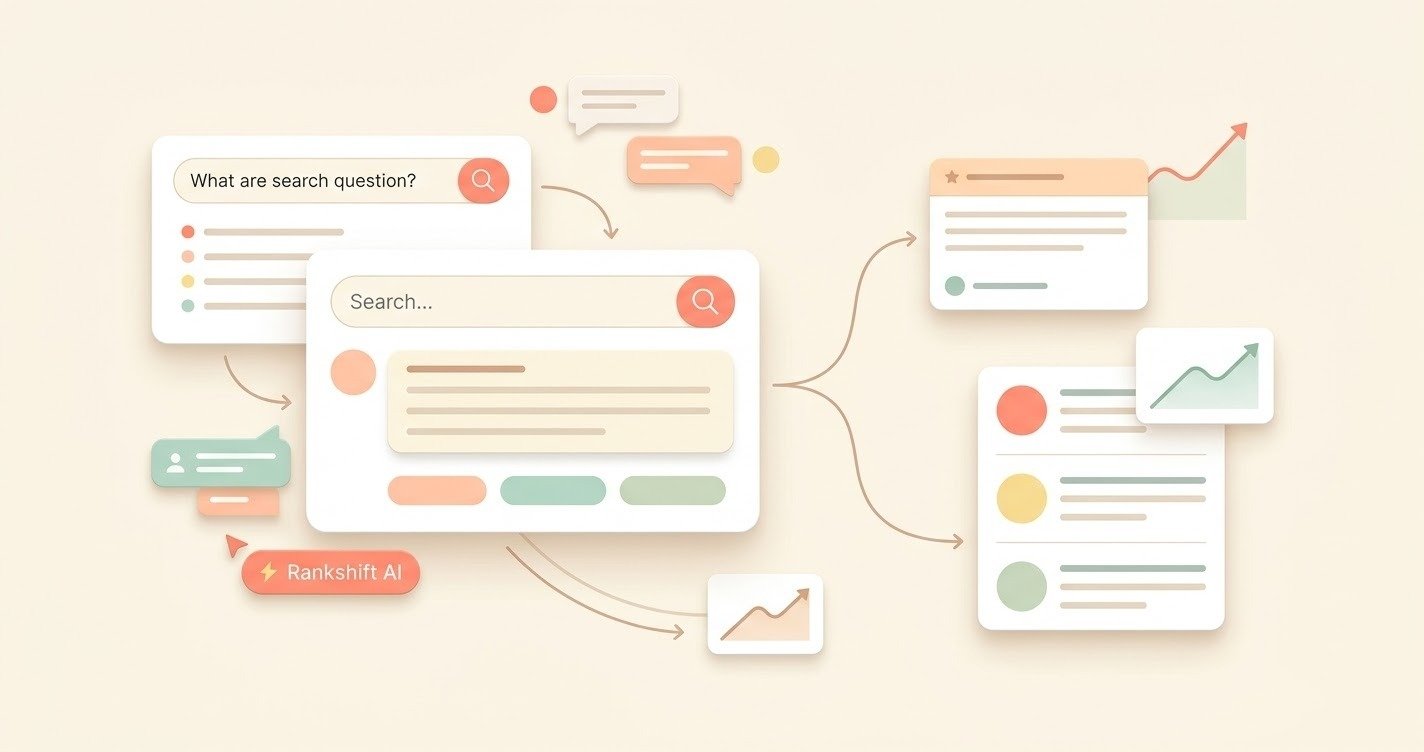
The Rankshift AI SEO tool is designed to help businesses understand how their brands appear in these AI-generated answers. Rather than focusing only on traditional Google keyword positions, it monitors whether selected brands are mentioned, how they are described, which competitors appear alongside them, and which web pages AI systems cite as sources.
For example, imagine you own a website that provides email marketing software. A potential customer asks ChatGPT, “What are the best email marketing tools for small businesses?” Your company might appear in the answer, appear below several competitors, or not appear at all. Rankshift helps you monitor these patterns across selected prompts and AI platforms.
According to its official documentation, the platform provides visibility tracking, competitor benchmarking, citation analysis, sentiment monitoring, and other reporting features. It is intended for businesses, in-house SEO teams, and agencies that want to understand their presence in AI-generated responses.
However, AI visibility tracking is different from proving that a website ranks well on Google. A brand may receive strong organic search traffic without appearing frequently in AI answers, or it may be mentioned by AI systems without generating substantial website visits.
The important question is not simply whether your brand appears in an AI response. It is whether that visibility reaches relevant audiences and contributes to meaningful business outcomes.
How Does Rankshift Work?
The platform works by monitoring prompts, which are the questions people might ask AI assistants. These prompts can represent different stages of the customer journey, from general research to product comparisons and purchase decisions.
For example, a project management software company might track questions such as “best project management software for remote teams,” “alternatives to Trello,” and “which project management tools support small agencies?” These questions help reveal how AI systems respond to different user needs.
After setting up a brand, its competitors, and relevant prompts, the Rankshift AI SEO tool runs selected queries across supported AI engines. It records the resulting answers and analyzes brand mentions, answer positions, sentiment, and cited sources. Users can then compare results over time to identify changes in visibility.
One important detail is that AI answers are not fixed search rankings. Two users can ask similar questions and receive different recommendations because of differences in wording, context, available information, or the AI system itself. Therefore, a single response is not enough to establish a reliable trend.
Repeated measurements are more useful. If a competitor consistently appears in responses about a particular product category while your brand rarely appears, that pattern may indicate an opportunity to improve your content, reputation, or coverage on relevant websites.
It is also important to choose prompts carefully. Tracking irrelevant questions can produce impressive-looking reports without revealing anything useful about potential customers. A smaller set of commercially relevant prompts may be more valuable than hundreds of unrelated questions.
The results should be treated as observations of sampled AI responses, not a guarantee of how every user will experience an AI platform.
Key Features and AI Platforms
Rankshift offers several features that help users investigate how AI assistants represent their brands. The exact usefulness of each feature depends on the business, the selected prompts, and the quality of the data being collected.
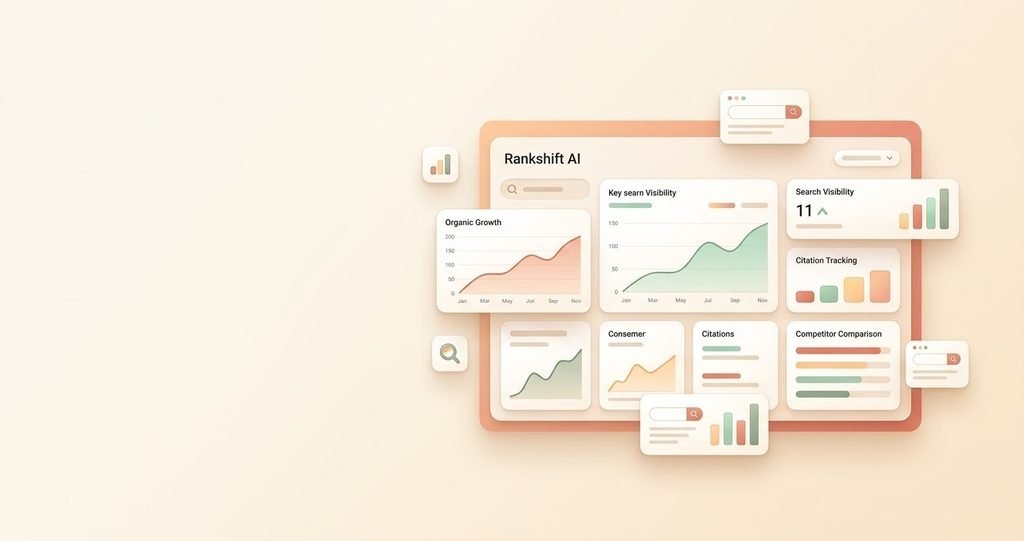
AI visibility tracking measures how frequently a brand appears in the responses to tracked questions. This can help businesses establish a baseline and observe whether their visibility changes after publishing new content or improving their online presence.
Competitor benchmarking compares a brand’s visibility with selected competitors. For example, a software company may discover that three competing products appear more frequently in AI answers about its main category. This gives the marketing team a specific area to investigate instead of relying on general assumptions.
Citation tracking identifies the web pages and domains referenced in AI-generated answers. This is particularly useful because it can reveal which sources contribute to recommendations in a particular niche. A competitor might be mentioned because its website provides useful documentation, or because third-party publications discuss its products.
Sentiment and answer-position analysis help users understand how a brand is described and where it appears in a response. However, sentiment labels are automated interpretations and should be checked against the original answers when decisions depend on them.
According to the official Rankshift website, the platform supports nine AI engines: ChatGPT, Gemini, Google AI Overviews, Google AI Mode, Perplexity, Claude, Microsoft Copilot, Mistral, and Meta AI. Availability and product capabilities should be checked against the current documentation before selecting a plan.
These features make the Rankshift AI SEO tool relevant to organizations that need more than occasional manual searches. Still, tracking a mention does not automatically explain why it occurred or prove that the mention generated a customer.
Understanding AI Visibility Metrics
AI visibility reports can be confusing when users do not understand what each metric measures. Before making decisions from a dashboard, it is important to distinguish brand mentions, visibility scores, share of voice, citations, and actual website traffic.
Visibility score generally represents how often a brand appears across the prompts being monitored. Its meaning depends on the platform’s calculation method and the prompts included in the report. A score should not be interpreted as a universal percentage of all AI users who know the brand.
Share of voice compares a brand’s visibility with that of competitors within the selected dataset. Suppose your company appears in 20 of 100 tracked responses and a competitor appears in 35. That suggests the competitor has greater visibility in this sample, but the result does not prove that it has more customers or higher revenue.
Citation share focuses on the sources referenced by AI responses. If your website is cited less frequently than competing websites, examine the specific questions and pages involved. Your content may lack relevant details, clear explanations, original evidence, or information that directly answers the user’s question.
Answer position records where a brand appears when an AI response lists multiple options. First position can be useful to monitor, but AI-generated lists are not equivalent to Google’s ten blue links.
The Rankshift AI SEO tool can help organize these measurements, but interpreting them requires context. Compare similar prompts across consistent periods, record changes to the tracking setup, and investigate the actual responses behind unusual increases or decreases.
Most importantly, separate visibility metrics from business metrics. Use analytics, referral data, conversions, and customer inquiries to determine whether increased AI exposure produces measurable value. AI visibility is a useful diagnostic signal, not a substitute for business performance data

Rankshift Pricing and Credit Limits
Pricing is an important consideration because AI visibility platforms can consume substantial resources when users monitor many prompts across multiple AI engines.
Rankshift uses a credit-based subscription model. Its published pricing information, checked in October 2026, lists the following plans with annual billing:
| Plan | Monthly equivalent | Monthly credits |
| Starter | $82 | 9,500 |
| Professional | $189 | 22,000 |
| Business | $425 | 53,000 |
| Enterprise | Custom | Custom |
Monthly billing costs more than annual billing, and prices may change. These figures exclude any applicable taxes. Check the official pricing page before purchasing.
The most important detail is that the advertised number of daily prompts is not the same as the number of prompts you can monitor across every AI engine. According to published documentation, most model runs consume two credits, while some runs involving Claude or Copilot with search can consume five.
Consider a simple example. If you have 9,500 monthly credits and each run costs two credits, you can perform approximately 4,750 runs. If you monitor 20 prompts across three engines every day for 30 days, you need 1,800 runs. At two credits per run, that would use 3,600 credits, assuming every run has the same cost and there are no additional charges.
Monitoring more engines, increasing the number of prompts, or running checks more frequently increases consumption. Monthly subscription credits also expire rather than automatically rolling over, according to the reviewed pricing information.
Before selecting a plan, calculate your expected monthly usage. Agencies should consider how many brands, prompts, AI engines, and reporting periods they actually need. The Rankshift AI SEO tool may fit teams that need flexible multi-project tracking, but credit consumption can make budgeting less straightforward than a fixed prompt allowance.
Also Read: Best SaaS SEO Tools to Boost Your Website Rankings in 2026
Benefits and Key Limitations
The main benefit of AI visibility tracking is that it replaces occasional manual checks with a more structured way to observe brand mentions, competitors, and citations. Instead of repeatedly asking AI assistants the same questions yourself, you can review recorded responses and identify patterns over time.
This can be useful when planning content. For example, if several relevant AI responses cite industry comparison pages but rarely cite your website, you can investigate whether your existing content answers the same questions clearly enough. You might also discover that customers frequently receive recommendations based on third-party reviews rather than product pages.
Another practical advantage is competitor analysis. Knowing which competing brands appear in relevant responses helps marketing teams investigate their content, industry coverage, product documentation, and reputation across the web.
However, several limitations deserve attention.
First, AI answers vary. Results from a tracked set of prompts cannot represent every possible question or every user’s experience. Changes in model behavior can also affect visibility independently of your website’s work.
Second, a visibility report does not necessarily explain causation. If your brand appears more frequently after publishing an article, that timing alone does not prove the article caused the improvement.
Third, tracking does not guarantee rankings, citations, traffic, or sales. A platform can identify patterns, but businesses still need to evaluate their content and measure outcomes independently.
Finally, some independent reviews describe limitations around turning insights into implemented changes, including the need to review recommendations and edit AI-generated content. The maturity and availability of specific content features should be verified during a trial.
A balanced evaluation of the Rankshift AI SEO tool should therefore consider both its monitoring capabilities and the work required after the report is generated. Useful data matters most when a team can interpret it correctly and act on the findings.
Rankshift vs Traditional SEO Tools
Traditional SEO platforms and AI visibility tools address related but different problems. Understanding this difference helps businesses avoid paying for overlapping features they do not need.
Traditional SEO tools commonly focus on keyword research, Google search rankings, backlink analysis, technical SEO audits, organic traffic estimates, and competitor keyword strategies. These functions help explain how websites perform in conventional search results.
AI visibility platforms focus on whether AI assistants mention brands, which sources they cite, how they describe competing products, and how those answers change over time. These measurements address a different discovery channel.
For example, a website might rank on Google’s first page for a software comparison keyword but still be absent from ChatGPT’s answer to a similar question. Conversely, an AI assistant might cite a detailed third-party review that does not rank prominently for the exact phrase being monitored.
The Rankshift AI SEO tool is therefore better understood as a complement to traditional SEO rather than a direct replacement for it. A team that needs backlink research or detailed keyword difficulty estimates will still need suitable conventional SEO software.
The strongest workflow combines both approaches. Use keyword research and search performance data to understand what people search for, then use AI visibility tracking to investigate how AI assistants answer related questions. Review cited sources to identify content gaps, improve relevant pages, and monitor whether the changes coincide with measurable improvements.
Neither type of tool can guarantee search visibility. Their value comes from helping teams make better-informed decisions using different sets of evidence.
Who Should Use Rankshift?
Rankshift may be useful for marketing agencies, established brands, software companies, and in-house SEO teams that want to monitor their presence across several AI search platforms.
Agencies managing multiple clients may find project and team management particularly relevant. A single workflow for monitoring different brands can help organize reporting, compare competitors, and identify recurring visibility gaps across industries.
Businesses that depend on recommendations, product comparisons, or informational discovery may also benefit. For example, a SaaS company can monitor questions about its product category, while a professional services firm can track how AI assistants respond to questions about the services it provides.
However, the tool may be unnecessary for a website that only needs basic keyword research, a technical audit, or occasional checks of its existing Google rankings. Those needs can often be addressed more directly with conventional SEO tools.
Also Read: How to Fix Page Crawled Currently Not Indexed (Complete Guide 2026)
Before subscribing, identify the questions you need answered. Can you define relevant prompts? Do you need daily monitoring or would weekly checks be enough? Will anyone review the citations and implement changes? Can you connect the findings with website analytics and conversions?
A trial is a practical way to answer these questions. Test a representative set of prompts, examine the raw responses, compare competitor results, and calculate expected credit usage before committing to a paid plan.
Ultimately, the Rankshift AI SEO tool is most useful when AI search visibility is a real business concern and the team has a process for acting on the data. It should be evaluated on the quality of its evidence, the relevance of its reports, and the decisions it helps support—not simply on the number of AI platforms it lists.
AI search is evolving, but the basic principle remains the same: understand how potential customers discover information, publish genuinely useful content, and measure whether your efforts lead to meaningful results.