
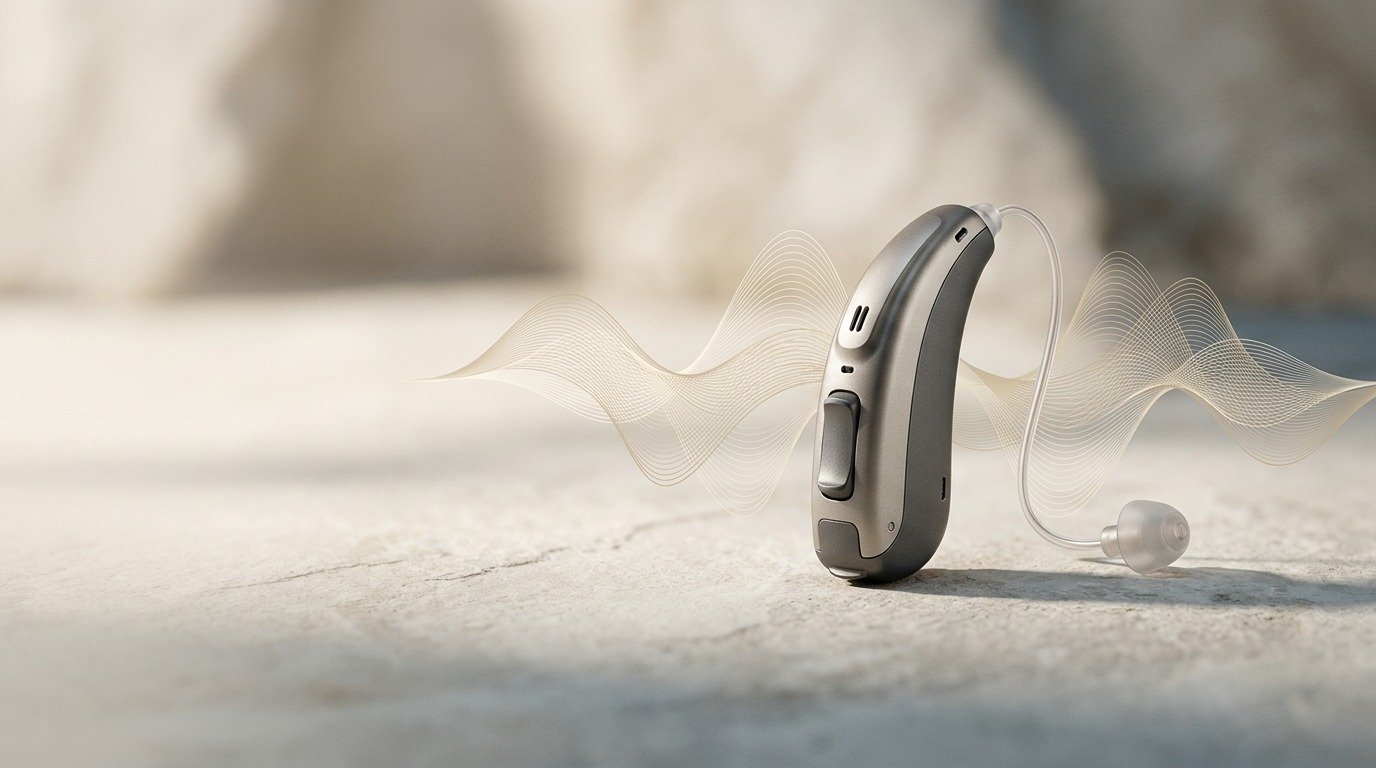
Choosing a hearing aid today involves more than finding a device that makes sounds louder. People want to understand conversations in crowded environments, enjoy clearer phone calls, move comfortably between different listening situations, and use technology that adapts to their daily routines. Artificial intelligence is increasingly changing how modern hearing aids address these challenges.
Starkey Edge AI is an advanced prescription hearing aid platform developed by Starkey, a manufacturer known for its work in hearing technology. Introduced in October 2024, the platform brought a dedicated neural processing unit into its G2 Neuro Processor, allowing hearing aids to analyze complex sound environments and apply AI-driven processing in real time.
Unlike traditional hearing devices that primarily rely on programmed amplification and conventional noise management, this platform uses deep neural network technology to identify different sound characteristics and improve speech audibility. Its capabilities include speech enhancement, background noise management, personalized listening adjustments, wireless connectivity, and integration with smartphone features.
However, understanding its actual value requires looking beyond marketing claims. Its processor, available hearing aid styles, battery performance, real-world limitations, and differences from newer Starkey platforms all matter when evaluating whether it is a suitable option.
This guide explores the technology, practical features, independent performance findings, and important considerations that potential hearing aid users should understand before making a decision.
What Is Starkey Edge AI and How Does It Work?
Starkey Edge AI is a prescription hearing aid technology platform designed to improve how users experience speech, background sounds, and everyday listening environments. Rather than simply increasing the volume of incoming audio, it uses artificial intelligence to analyze sound characteristics and adjust processing according to the acoustic situation.
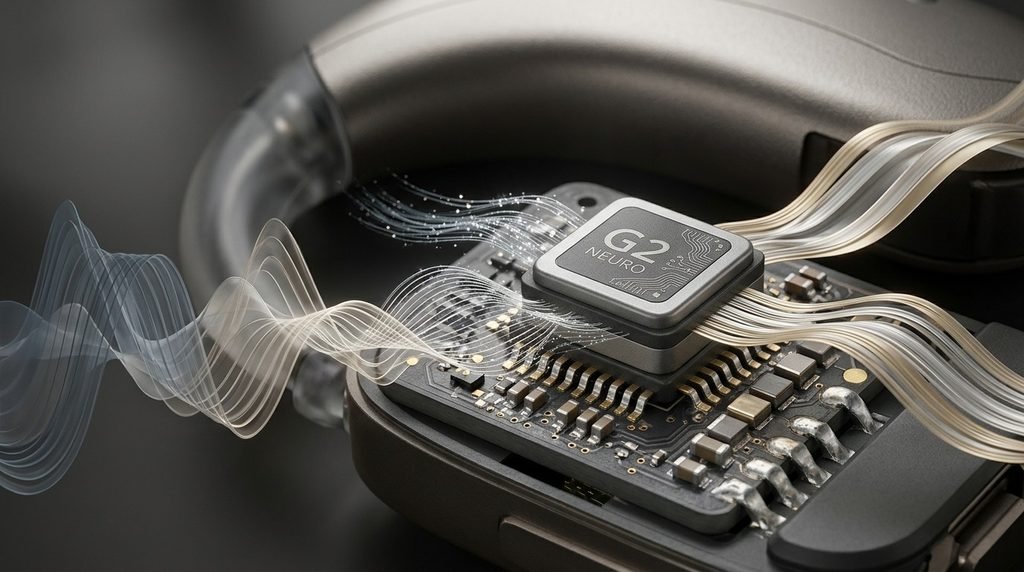
The platform was introduced in October 2024 and represents an important development in Starkey’s hearing technology. Its central innovation is the G2 Neuro Processor, which combines conventional hearing aid processing with a dedicated neural processing unit. This hardware allows advanced AI calculations to operate directly inside the hearing device instead of depending on a connected smartphone or external computer.
Understanding Its Operating Process
The technology can be understood through three main stages.
1. Sound collection: Small microphones built into the hearing aids capture sounds from the surrounding environment. These sounds may include conversations, traffic, television, music, household activities, and other background noises.
2. Sound analysis: The G2 Neuro Processor analyzes incoming audio using deep neural network processing. It identifies different acoustic characteristics and evaluates which sounds are likely to contain useful speech information.
3. Audio adjustment: Based on the analysis, the hearing aid applies appropriate sound processing to support speech audibility and manage unwanted noise. These adjustments help users experience a more suitable listening environment.
One important distinction is that AI processing does not simply remove every sound except human speech. Background sounds can also provide important environmental awareness, so effective hearing technology must balance speech clarity, listening comfort, and awareness of surroundings.
What Makes This Technology Different?
Traditional hearing aids commonly use programmed amplification, compression, directional microphones, and digital noise reduction. These techniques remain important, but neural processing adds another level of acoustic classification.
For example, consider someone sitting in a restaurant where several people are talking simultaneously. Conventional amplification may increase both the conversation and surrounding noise. Advanced AI processing can analyze the complex soundscape and attempt to make relevant speech more distinguishable.
The result still depends on the user’s hearing profile, device fitting, listening environment, and individual needs.
Another important point is that this is prescription hearing technology, not a universal hearing solution. An audiologist must evaluate hearing ability and configure suitable settings.
Understanding these fundamentals makes it easier to evaluate its processor, speech enhancement capabilities, and practical advantages in everyday situations.
Inside the G2 Neuro Processor and AI Technology
The G2 Neuro Processor is the central technological component behind the platform. Its importance comes from integrating a neural processing unit (NPU) directly into the hearing aid’s processing architecture. This allows the device to perform specialized AI calculations while maintaining the power efficiency required for a small, wearable product.
To understand why this matters, it is useful to distinguish between a conventional digital signal processor and an AI-focused processing architecture.
A traditional digital signal processor performs programmed mathematical operations to modify incoming audio. These operations can control amplification, frequency response, compression, and noise reduction. An AI-enabled processor adds the ability to analyze more complex patterns in incoming sound.
What Is a Neural Processing Unit?
A neural processing unit is specialized hardware designed to execute calculations used by artificial neural networks. These calculations are particularly useful for recognizing patterns in complicated information, including audio signals.
In a hearing aid, an NPU can support the processing demands of deep neural networks without requiring the same type of general-purpose computing resources used in larger devices.
This is especially important because hearing aids operate under strict limitations involving physical size, battery capacity, heat generation, and processing speed.
How Deep Neural Networks Help
Deep neural networks are computational models trained to recognize patterns in data. In hearing technology, these models can learn characteristics associated with speech and other environmental sounds.
For example, human conversation contains recognizable acoustic patterns that differ from continuous traffic noise, ventilation systems, or overlapping background voices.
The processor uses learned patterns to support sound classification and processing decisions. This helps the hearing aid respond more intelligently to changing acoustic conditions.
Starkey reports that its DNN-enhanced sound management system is 30% more accurate at identifying speech compared with previous generations. This is a manufacturer-reported comparison, not a guarantee that every wearer will experience a 30% improvement in understanding conversations.
Why On-Device AI Matters
Processing audio directly inside a hearing aid offers several practical advantages.
- Low processing dependence: Everyday sound analysis does not require constant communication with a smartphone.
- Immediate adjustments: The device can respond to changing acoustic conditions during normal operation.
- Power efficiency: Specialized hardware helps manage the energy requirements of AI processing.
- Wearable design: Complex calculations can take place within a compact hearing aid.
The G2 Neuro Processor demonstrates how AI hardware can be adapted for hearing healthcare. Its value is not simply that it contains an AI chip, but that the chip supports real-time audio processing within the physical and power limitations of a hearing device.
How Edge AI Improves Speech Clarity in Noise
Understanding speech in noisy environments is one of the most difficult challenges for people with hearing loss. A conversation may be relatively easy to follow in a quiet room but become frustrating in restaurants, shopping centers, family gatherings, or busy workplaces.
This happens because multiple sound sources compete for attention. When voices overlap with music, machinery, traffic, or other conversations, distinguishing the intended speaker becomes more difficult.
Starkey Edge AI addresses this challenge through AI-supported sound classification and speech enhancement.
Why Background Noise Makes Conversations Difficult
Speech contains important acoustic details that help listeners recognize words. These details include frequency patterns, timing, consonants, vowels, and changes in vocal intensity.
Background noise can mask these details, making individual words difficult to understand even when the overall sound is loud enough.
Simply increasing amplification does not necessarily solve this problem. It may make unwanted sounds louder without providing sufficient improvement in speech intelligibility.
How AI-Based Speech Processing Helps
The G2 Neuro Processor uses deep neural network technology to identify complex sound patterns and support improved speech processing.
For example, imagine attending a family dinner where four people are speaking while background music plays. The hearing aid must process overlapping voices and environmental sounds without making the listening experience unnecessarily uncomfortable.
Its AI-based system analyzes the sound environment and applies processing intended to improve speech audibility while managing unwanted noise.
The platform also includes directional microphone technology, which can help emphasize sounds arriving from particular directions. This is useful when the listener wants to concentrate on someone speaking nearby.
What Happens in Different Listening Environments?
Restaurants: AI sound processing can help manage competing voices and background noise, although understanding every conversation remains difficult in extremely loud spaces.
Family gatherings: The technology can help improve speech audibility when multiple people are talking. However, overlapping speakers may still require additional attention and positioning.
Workplaces: Users may benefit from better sound management when communicating in environments containing office equipment, ventilation, or distant conversations.
Outdoor environments: Traffic and wind can create challenging listening conditions. Microphone design and appropriate hearing aid settings remain important.
Does It Guarantee Clear Speech Everywhere?
No. This is an important consideration that many product descriptions do not explain sufficiently.
AI processing cannot completely eliminate acoustic masking, restore normal hearing, or guarantee that every spoken word will be understood. Results vary according to hearing loss, device programming, distance from the speaker, background noise intensity, and individual listening ability.
The technology should therefore be considered an advanced tool for improving communication rather than a replacement for professional hearing care.
Edge Mode+ and Intelligent Sound Optimization
One of the most useful features of this hearing aid platform is Edge Mode+. It provides an additional level of listening optimization when users encounter situations where their everyday hearing settings may not provide enough assistance.
Most hearing aids are programmed with settings suitable for common environments. These settings can work well in quiet rooms, ordinary conversations, and familiar surroundings. However, particularly difficult listening situations may require different processing adjustments.
Edge Mode+ is designed to address these moments.
How Edge Mode+ Works
When users activate the feature, the hearing aids analyze their current acoustic environment and apply additional sound processing.
The system can make adjustments involving amplification, noise management, and directional processing. Depending on the available technology level and configuration, users can also select a listening intention.
For example, someone attending a busy restaurant may prefer enhanced speech processing. Another person working near machinery may prioritize reducing distracting noise.
This ability to request a different listening response gives users additional control over their hearing experience.
Automatic and User-Controlled Optimization
A useful distinction is that ordinary automatic hearing aid processing and Edge Mode+ are not exactly the same.
Automatic processing operates as part of the device’s everyday sound management. Edge Mode+, however, provides an additional on-demand optimization process that users can activate when they need more assistance.
Some higher technology configurations also support automatic rescanning and additional personalization capabilities. Feature availability depends on the technology tier and device style.
Real-World Examples
Consider someone attending a wedding reception. Music, announcements, and conversations may occur simultaneously. Normal hearing settings may not provide the desired speech clarity.
Activating Edge Mode+ allows the hearing aid to analyze the environment again and apply additional adjustments.
A similar situation can occur during a business meeting, a crowded restaurant visit, or a family gathering.
Starkey has reported research showing improvements in speech recognition and listening effort with Edge Mode+. One published manufacturer-supported study reported an 11% increase in word recognition in a particular testing condition. This result should not be interpreted as a guaranteed improvement for every user.
Also Read: Intelligent Workflow: How AI Makes Work Smarter for Teams
Why User Control Matters
Not every listening situation requires maximum noise reduction. Sometimes environmental awareness is just as important as speech clarity.
The ability to select a listening intention makes the feature more practical because users can request additional assistance based on their immediate needs.
The My Starkey application provides access to supported controls, depending on the device and configuration.
Ultimately, Edge Mode+ is most valuable when users understand when to activate it and have their devices professionally adjusted for their hearing requirements.
Starkey Edge AI Models, Battery Life, and Connectivity
Hearing aid performance depends on more than the processor inside the device. Physical design, battery technology, connectivity, microphone placement, and comfort also influence how useful a hearing aid becomes in everyday life.
Starkey offers several hearing aid styles within its Edge AI product family. These options allow hearing professionals to select devices according to hearing requirements, physical preferences, and lifestyle considerations.
Available Hearing Aid Styles
The product family includes several configurations:
| Model | Main design characteristics |
| RIC RT | Rechargeable receiver-in-canal design |
| mRIC R | Compact rechargeable receiver-in-canal design |
| RIC 312 | Receiver-in-canal design using replaceable batteries |
| CIC | Completely-in-canal custom design |
| ITC/HS | Custom in-the-canal or half-shell styles |
| ITE R | Rechargeable in-the-ear design |
Not every feature is available across every style. Rechargeability, wireless functionality, accessories, and other capabilities depend on the selected model.
Battery Life and Charging
Battery performance is an important consideration, particularly for people who wear hearing aids throughout the day.
Starkey reports up to 51 hours of battery life for the Edge AI RIC RT under specified conditions. Actual performance can vary according to streaming activity, hearing aid settings, battery condition, and individual usage.
Rechargeable models reduce the need to purchase and replace disposable batteries. They are particularly convenient for users who prefer a simple charging routine.
The RIC 312 model, by comparison, uses replaceable size 312 batteries. This option may appeal to people who prefer traditional battery replacement rather than daily charging.
Wireless Connectivity
Connectivity is another important part of the product family.
Supported models provide wireless features that can connect compatible smartphones and accessories. Depending on the configuration, users may be able to stream phone calls, music, and other audio directly to their hearing aids.
Bluetooth Low Energy Audio and Auracast compatibility are also relevant features of supported Edge AI configurations.
Auracast is a broadcast audio technology that allows compatible devices to receive audio from supported public or private broadcasts. Potential applications include announcements, television audio, and shared listening environments.
Smartphone Application and Accessories
The My Starkey application provides supported controls and personalization options. Users can access hearing aid settings, adjust available features, and use compatible connected services.
Additional StarLink accessories can also expand the listening experience in suitable configurations.
Before purchasing, buyers should confirm smartphone compatibility, accessory requirements, and the specific features included in their chosen hearing aid style.
Real-World Performance: Comfort, Sound, and Usability
Technical specifications help explain what a hearing aid can do, but everyday performance determines whether users find it genuinely useful.
A hearing aid may have an advanced processor and multiple AI features, yet its effectiveness still depends on comfort, correct programming, listening habits, and the user’s individual hearing profile.
This is why real-world evaluation should consider several factors instead of focusing exclusively on manufacturer specifications.
Sound Quality in Everyday Situations
One of the main strengths of the platform is its focus on speech processing in challenging acoustic environments.
The G2 Neuro Processor supports real-time sound classification and AI-based adjustments. These capabilities are designed to make speech more distinguishable while managing distracting sounds.
Independent testing provides another perspective beyond manufacturer specifications. HearingTracker’s review of the Edge AI RIC RT 90 reports an independent HearAdvisor SoundGrade of A and a HearingTracker score of 4.2.
These findings are useful indicators, but they relate to specific tested configurations and testing methods. They do not mean every wearer will achieve identical results.
Comfort and Physical Design
Comfort is particularly important because hearing aids may be worn for many hours each day.
RIC devices place the main body behind the ear while a receiver sits inside the ear canal. This arrangement can provide a relatively discreet design while accommodating different hearing requirements.
Custom in-ear models offer another option for people who prefer devices fitted according to the shape of their ears.
However, comfort depends on ear anatomy, dome or earmold selection, receiver size, retention, and professional fitting.
Smartphone Experience
The My Starkey application adds another dimension to everyday usability.
Depending on the model and supported configuration, users can access hearing adjustments, streaming options, and additional wellness-related features.
These controls can be useful for people who prefer managing certain aspects of their hearing experience through a smartphone.
Nevertheless, users should check device compatibility before assuming that every application feature will work with their phone.
What About Difficult Listening Conditions?
Even advanced hearing aids have limitations in extremely noisy environments.
People with significant hearing loss may continue to experience difficulties when several speakers talk simultaneously or when the intended speaker is far away.
Good communication habits remain valuable. Sitting closer to the speaker, choosing quieter seating areas, reducing background music, and facing the person talking can improve the listening experience.
Why Professional Fitting Is Essential
A hearing aid should be programmed according to an individual’s hearing test and listening requirements.
Real-ear measurements, appropriate gain settings, receiver selection, and follow-up adjustments can influence performance substantially.
The most advanced hardware cannot compensate fully for an unsuitable fitting. Therefore, professional assessment should remain an essential part of the purchasing decision.
Starkey Edge AI vs Genesis AI and Omega AI
Comparing different hearing aid generations is important because manufacturers regularly introduce new processors, sound processing systems, and connectivity features.
Starkey’s product development includes Genesis AI, Edge AI, Omega AI, and the newer Omega AI+ platform announced in October 2026.
Although these products share some underlying technology, they should not be treated as identical devices.
Edge AI vs Genesis AI
Genesis AI introduced Starkey’s earlier Neuro Processor architecture and brought significant advances in AI-supported sound processing.
Edge AI builds on this foundation with the G2 Neuro Processor, which integrates a dedicated neural processing unit.
The newer architecture supports more advanced DNN processing and real-time sound classification. Starkey also reports improvements in speech identification compared with previous generations.
For buyers considering these two generations, the important question is whether the newer processing capabilities justify the difference in price.
Edge AI vs Omega AI
Omega AI arrived in October 2025 as a newer hearing technology generation.
It introduced further developments in AI processing, sound management, and connectivity. Depending on the model, users can also access updated wellness and hearing-related features.
An important distinction is that Edge AI remains a capable earlier-generation product, but it is no longer Starkey’s newest flagship platform.
HearingTracker’s independent comparison provides useful information about their respective sound performance, available features, and value considerations.
What Changed With Omega AI+?
In October 2026, Starkey announced Omega AI+ with its G4 Neuro Processor and Quad DNN architecture.
The new platform introduces further developments in speech processing, feedback management, connectivity, and wellness capabilities.
These announcements demonstrate how quickly AI-powered hearing technology is evolving.
| Comparison | Genesis AI | Edge AI | Omega AI / Omega AI+ |
| Processing generation | Earlier Neuro Processor | G2 Neuro Processor | Newer processing architectures |
| AI capabilities | DNN-based processing | Dedicated NPU and advanced DNN | Further AI architecture developments |
| Speech enhancement | Supported | Enhanced processing | Newer processing developments |
| Edge Mode+ | Supported configurations | Supported configurations | Newer Edge Mode developments |
| Product generation | Older | 2024 | 2025–2026 |
Which One Should Buyers Choose?
Genesis AI may be worth considering when affordability is a priority and the device meets the user’s hearing requirements.
Edge AI may appeal to people who want advanced AI processing without necessarily purchasing the newest generation.
Omega AI and Omega AI+ may be more appropriate for buyers who prioritize newer technology and additional capabilities.
However, a newer processor does not automatically mean a better outcome for every individual. Hearing loss, comfort, fitting quality, available budget, and professional recommendations should guide the final decision.
Read This One: AI Edging: How It Works, Benefits and Applications
Starkey Edge AI: Pros, Cons, and Who Needs It?
Before purchasing an advanced hearing aid, it is important to understand both its advantages and its limitations. A product may offer impressive technology, but the best choice depends on whether those features address the user’s actual communication difficulties.
Starkey Edge AI combines dedicated AI processing, multiple hearing aid styles, wireless connectivity, and customizable listening features. These capabilities make it an interesting option for people who regularly experience challenging listening environments.
Main Advantages
Advanced AI processing: The G2 Neuro Processor includes a dedicated neural processing unit that supports real-time sound analysis and speech enhancement.
Improved speech management: Its AI-based processing is designed to help users distinguish conversations from distracting background sounds.
On-demand optimization: Edge Mode+ provides additional sound adjustments when everyday settings are insufficient for a particular listening situation.
Multiple physical styles: Buyers can explore rechargeable, replaceable-battery, receiver-in-canal, and custom in-ear options.
Modern connectivity: Compatible configurations support wireless audio features, smartphone integration, and selected Auracast capabilities.
Additional customization: The My Starkey application provides access to supported controls and connected features.
Potential Disadvantages
Premium pricing: Advanced prescription hearing aids can represent a substantial investment. Actual prices vary by provider, technology tier, location, fitting services, and accessories.
Professional fitting required: Users generally need an audiologist or qualified hearing professional to assess and program their devices.
Not every feature is universal: Some capabilities depend on the selected model, technology level, and compatible smartphone or accessory.
Limited ability in extreme noise: AI processing can improve listening conditions, but it cannot guarantee perfect speech understanding in every environment.
Newer alternatives exist: Buyers interested in the latest Starkey developments should also evaluate Omega AI and Omega AI+.
Who Should Consider This Hearing Aid?
This platform may be worth discussing with a hearing professional if you:
- Frequently struggle to understand conversations in restaurants or crowded places.
- Want additional assistance with speech and background noise management.
- Prefer having rechargeable and traditional battery options.
- Value smartphone connectivity and personalized hearing controls.
- Want advanced hearing technology without automatically choosing the newest available generation.
On the other hand, people with mild hearing difficulties who primarily need assistance in quiet environments may not require every advanced feature.

Frequently Asked Questions
Is Starkey Edge AI a good hearing aid?
It is an advanced prescription hearing aid platform with dedicated AI processing, speech enhancement, and multiple design options. Its suitability depends on individual hearing needs, comfort, professional fitting, and budget.
How long does its battery last?
Starkey reports up to 51 hours for the rechargeable RIC RT under specified conditions. Actual battery life varies with usage, streaming, and settings.
Can it reduce background noise?
Yes. Its AI-supported sound processing and Edge Mode+ are designed to manage unwanted noise and improve speech audibility. However, complete noise elimination is not guaranteed.
Does it work with smartphones?
Compatible configurations support smartphone connectivity and the My Starkey application. Buyers should verify compatibility with their specific phone and hearing aid model.
Is it better than Genesis AI?
It introduces a newer G2 Neuro Processor with an integrated NPU and enhanced AI processing capabilities. However, whether it is better for an individual depends on their hearing requirements and the difference in purchase cost.
Is it still Starkey’s newest hearing aid technology in 2026?
No. Omega AI and the October 2026 Omega AI+ announcement represent newer developments in Starkey’s product lineup.
Final Verdict
AI is becoming an increasingly important part of modern hearing technology, but the real measure of progress is how effectively these developments improve everyday communication.
Starkey’s Edge AI platform demonstrates how dedicated neural processing, speech enhancement, and personalized sound adjustments can support people who struggle with difficult listening environments.
Its combination of G2 Neuro Processor technology, Edge Mode+, multiple hearing aid styles, and wireless connectivity makes it a substantial option in the prescription hearing aid market.
Nevertheless, buyers should compare it with newer generations, evaluate their individual hearing requirements, and discuss suitable configurations with a qualified hearing professional. The right hearing aid is not necessarily the one with the most advanced processor; it is the one that provides the most useful combination of sound quality, comfort, functionality, and value for the person wearing it.

One Response