
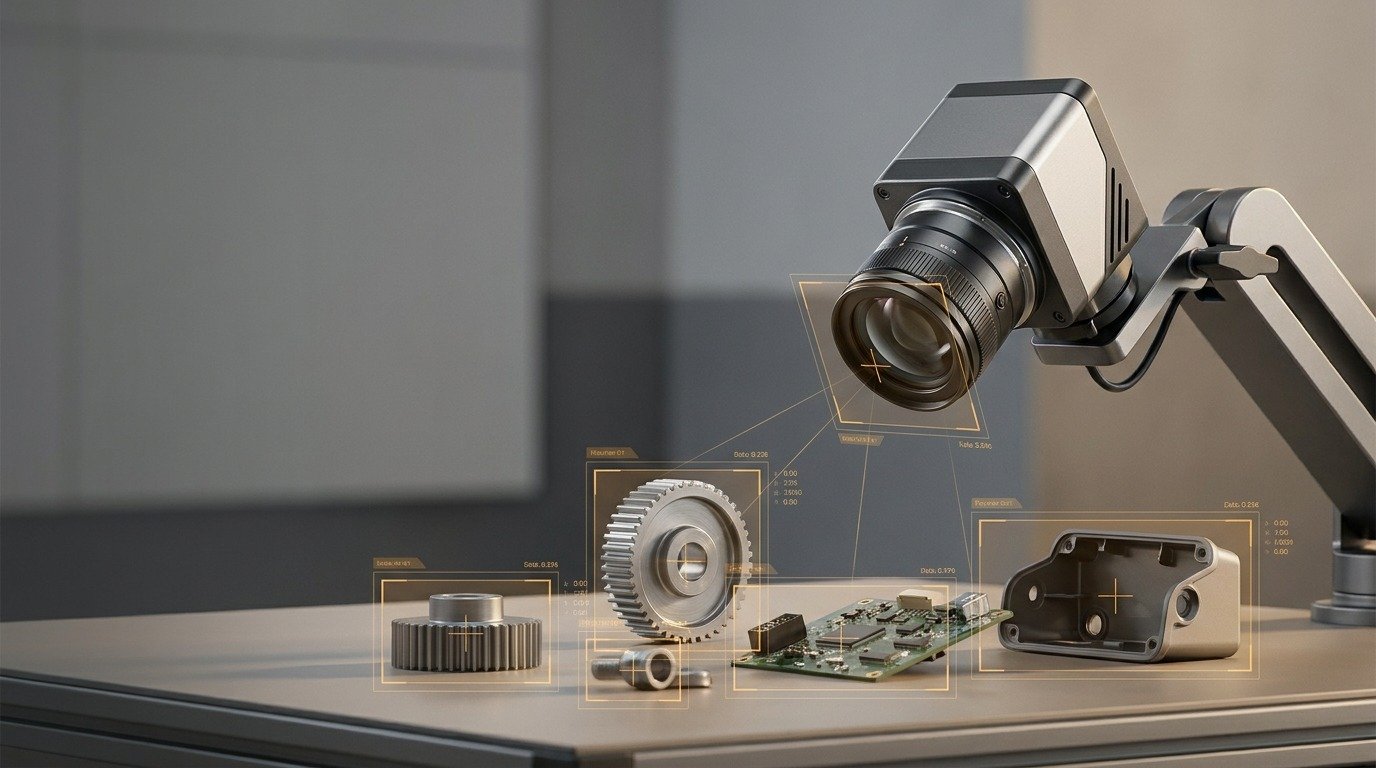
Artificial intelligence is changing how computers interact with the physical world. Instead of processing only text and numerical information, modern AI systems can now analyze photographs, interpret videos, recognize objects, and understand visual environments. This capability is becoming increasingly important across industries, including healthcare, manufacturing, transportation, agriculture, and security.
AI vision technology 2026 represents an important stage in this development. Modern vision systems are moving beyond basic image recognition toward more advanced visual understanding, combining computer vision, deep learning, vision-language models, and real-time processing. These developments allow machines to identify what appears in an image while increasingly interpreting relationships, activities, and surrounding context.
However, understanding this technology requires more than knowing what object detection means. Businesses and developers also need to understand how visual AI works, which technologies support it, where it provides practical value, and what limitations still prevent completely reliable automation.
This guide explores these developments, explains their real-world applications, and examines the technologies and trends shaping the future of intelligent visual systems.
1. What Is AI Vision Technology?
AI vision technology is a branch of artificial intelligence that enables computers and machines to interpret and analyze visual information. This information can come from photographs, digital images, security cameras, video recordings, medical scans, drones, and other imaging devices.
Traditional computer systems generally require clearly defined instructions to process information. AI-powered vision systems take a different approach. They learn patterns from training data and use those patterns to recognize objects, identify changes, classify images, and interpret visual details.
For example, consider a camera installed inside a manufacturing facility. A conventional camera simply records what happens in front of it. An intelligent vision system can analyze the footage, identify individual products, detect manufacturing defects, and notify operators when an item does not meet quality standards.
This difference explains why AI vision technology 2026 is becoming relevant to organizations that depend on visual inspections, monitoring, and automated decision-making.
How Is AI Vision Different From Image Recognition?
Image recognition is one specific capability within computer vision. It identifies what an image contains, such as a vehicle, person, animal, or product.
Modern visual intelligence can perform several additional tasks:
- Object detection: Identifies objects and determines their locations within an image.
- Image segmentation: Separates an image into meaningful regions or individual objects.
- Object tracking: Follows an object’s movement across multiple video frames.
- Scene understanding: Examines relationships between objects and their surroundings.
- Visual question answering: Responds to questions about information contained in an image.
- Activity recognition: Identifies actions and movements within video footage.
These capabilities serve different purposes. A retail system might count products on shelves, while a healthcare application might examine medical scans for unusual patterns.
Does AI Vision Understand Images Like Humans?
Not exactly. Human vision combines perception with experience, reasoning, memory, and an understanding of the surrounding world. AI systems learn visual patterns from datasets and use mathematical models to produce predictions or interpretations.
Advanced vision-language models can connect visual information with natural language, making it possible to ask questions about photographs and videos. However, their responses can still contain errors, particularly when images are unclear or situations are unfamiliar.
Understanding this distinction is important because recognizing an object does not automatically mean understanding everything happening around it.
2. How AI Vision Systems Work
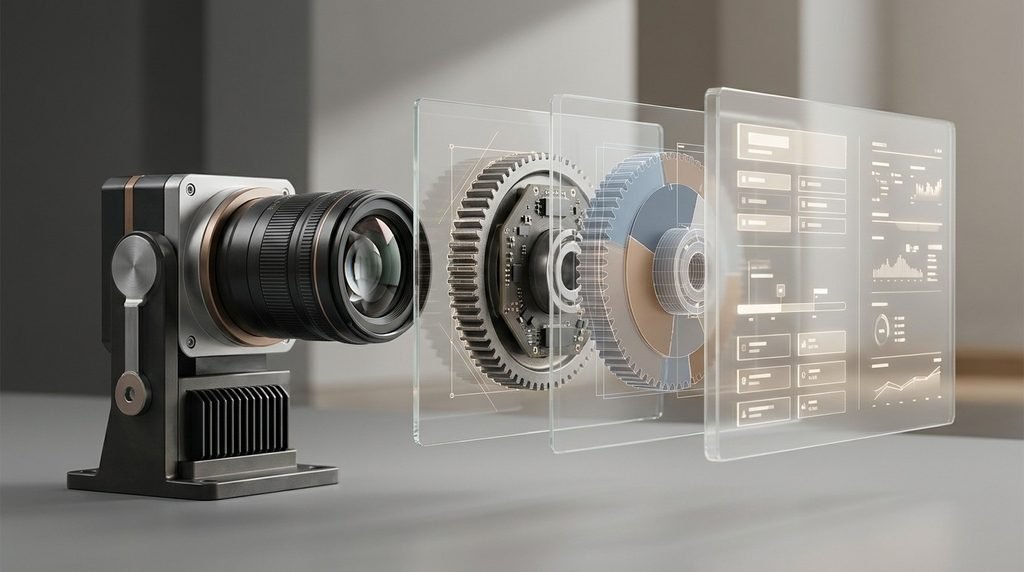
An AI vision system processes visual information through multiple stages. Although the architecture differs between applications, most systems follow a similar pipeline involving image acquisition, preprocessing, model inference, and output generation.
The process usually begins with a camera, scanner, or another imaging device. The captured information is then converted into a digital format that an AI model can analyze.
Step 1: Visual Data Collection
The first stage involves collecting images or video footage from an appropriate source. Depending on the application, this could include industrial cameras, smartphones, medical imaging equipment, satellites, or autonomous vehicle sensors.
The quality of collected data matters considerably. Poor lighting, low resolution, motion blur, and obstructed camera views can reduce the accuracy of subsequent analysis.
Step 2: Image Preprocessing
Before analysis, images may require resizing, normalization, noise reduction, or other adjustments. Preprocessing helps create consistent inputs and can improve model performance.
For example, a manufacturing inspection system may capture hundreds of product images under slightly different lighting conditions. Preprocessing helps reduce unnecessary visual variations so the model can concentrate on meaningful differences.
Step 3: AI Model Inference
The processed image enters a trained machine learning model. Depending on the task, the model may use convolutional neural networks (CNNs), vision transformers, or other deep learning architectures.
The model examines visual features and produces predictions. These predictions might identify an object, classify a medical image, locate a damaged component, or describe a scene.
Step 4: Interpretation and Decision Support
The system converts its predictions into useful outputs. For example, it might mark a defective product, count vehicles, or generate an alert when a predefined event occurs.
More advanced systems can combine visual analysis with language models and business rules to provide contextual information.
Step 5: Continuous Evaluation
A reliable deployment does not end when a model starts working. Developers must monitor its performance, review incorrect predictions, and evaluate how well it performs when real-world conditions change.
This is especially important when cameras, products, environments, or lighting conditions differ from the original training data.
The complete process explains how AI vision technology 2026 can transform raw visual information into structured insights that organizations can use in everyday operations.
3. Core Technologies Behind AI Vision
Modern visual intelligence depends on several interconnected technologies. Each contributes a different capability, and understanding their roles helps explain why some systems are better suited to specific tasks than others.
Convolutional Neural Networks
Convolutional neural networks, commonly known as CNNs, are deep learning architectures widely used for image analysis. They identify visual patterns such as edges, shapes, textures, and more complex features through multiple processing layers.
CNNs have supported many established computer vision applications, including facial detection, image classification, and industrial inspection.
Although newer architectures have expanded the available options, CNNs remain useful where efficient image processing and specialized visual recognition are required.
Vision Transformers
Vision transformers apply transformer-based techniques to image analysis. Instead of relying exclusively on traditional convolution operations, they divide images into smaller patches and learn relationships between different visual regions.
This approach can help models capture broader image context. It has also contributed to the development of advanced vision foundation models.
Vision-Language Models
Vision-language models (VLMs) connect visual information with natural language. They can analyze an image and generate descriptions, answer questions, or identify relationships between visual elements.
For example, a user could provide an image of a warehouse and ask which shelves appear empty. A suitable vision-language model can examine the image and generate a textual response.
However, the reliability of that answer depends on image quality, model capabilities, and the complexity of the question.
Generative AI and Multimodal Models
Generative AI extends visual capabilities beyond conventional classification and detection. Depending on the model, it can generate image descriptions, edit visual content, create synthetic training examples, or combine images with text and other information.
Multimodal AI takes this further by processing multiple information types, including text, images, audio, and video.
These technologies are increasingly important because many real-world problems cannot be understood through images alone.
Edge AI and Specialized Hardware
Edge AI allows visual models to process information close to where it is collected, such as on cameras, industrial computers, or embedded devices.
This reduces dependence on continuous cloud communication and can improve response times.
Together, these technologies form the foundation of AI vision technology 2026, although the most appropriate combination depends on processing requirements, available hardware, accuracy expectations, and deployment conditions.
4. Real-World Applications Across Industries
The value of computer vision becomes easier to understand when examining how organizations use it to solve practical problems. Rather than being limited to research laboratories, visual AI is already being applied in different operational environments.
Healthcare and Medical Imaging
Healthcare is one of the important areas for AI-assisted image analysis. Medical professionals work with X-rays, CT scans, MRI images, and other visual records that can contain complex patterns.
Computer vision models can help identify suspicious regions, measure anatomical structures, and prioritize images that require further review.
For example, a radiology workflow might use an AI system to highlight an area that deserves closer examination. The healthcare professional remains responsible for interpreting the findings and making clinical decisions.
These systems can support diagnostic workflows, but their performance must be validated for the intended patient population and clinical environment.
Manufacturing and Quality Inspection
Manufacturers use machine vision to examine products during production. Automated inspection can detect scratches, incorrect dimensions, missing components, and surface defects.
A particularly useful application is identifying defects that are difficult to detect consistently through manual inspection.
For example, an electronics manufacturer can use cameras to examine circuit boards and flag incorrectly positioned components before products move to the next production stage.
Roboflow’s 2026 industry report highlights manufacturing defect detection and quality inspection as major visual AI applications.
Transportation and Autonomous Vehicles
Vehicles use computer vision to interpret their surroundings. Cameras and other sensors help identify pedestrians, road signs, traffic signals, vehicles, and road boundaries.
These capabilities support driver assistance features and autonomous navigation systems.
However, safe operation requires more than recognizing individual objects. Vehicles must also estimate movement, understand spatial relationships, and respond to changing road conditions.
Agriculture and Environmental Monitoring
Agricultural applications use drone imagery, satellite images, and ground-based cameras to monitor crops.
Visual AI can help identify potential plant diseases, examine crop conditions, detect weeds, and estimate the distribution of vegetation.
Farmers can use these insights to investigate affected areas instead of inspecting every field manually.
Retail and Security
Retail businesses can use visual analytics to monitor shelf availability, understand store traffic patterns, and identify inventory discrepancies.
Security applications can analyze video footage to detect unusual activities, identify restricted-area access, and generate alerts based on predefined events.
Nevertheless, these applications require careful privacy controls, appropriate data retention policies, and human oversight.
The growing range of applications demonstrates how AI vision technology 2026 can support different industries without requiring every organization to build the same type of visual intelligence system.
5. Key AI Vision Trends in 2026
Visual AI is evolving as researchers and technology companies develop models that can process more complex information. Several developments are particularly important in 2026 because they are changing how systems interpret visual environments.
Vision Foundation Models
Vision foundation models are trained on large and diverse datasets to learn reusable visual representations. Unlike narrowly designed models, they can often be adapted to multiple tasks through additional training, prompting, or specialized components.
This makes development more flexible because organizations may not need to build an entirely separate model for every visual recognition task.
However, general-purpose models do not automatically outperform specialized systems. A model trained or fine-tuned for a particular industrial environment may still provide more reliable results for that specific task.
Agentic Vision Systems
One emerging direction combines visual perception with AI agents. Instead of simply reporting what appears in an image, these systems can use visual observations to decide which action or tool should come next.
For example, a warehouse monitoring system might detect an inventory discrepancy, retrieve relevant records, and notify the responsible team.
This represents a shift from passive visual monitoring toward more connected operational workflows. It does not mean every system can safely make independent decisions. Appropriate permissions, validation, and human supervision remain necessary.
Real-Time Edge Processing
Processing visual information locally is becoming increasingly important in environments where delays matter.
Industrial robots, smart cameras, and autonomous devices may need to respond immediately without waiting for information to travel to a distant cloud server.
Edge computing can reduce communication delays and bandwidth requirements, although it also introduces hardware limitations, power constraints, and model optimization challenges.
Multimodal Visual Intelligence
Multimodal AI combines visual information with text, audio, and other data sources.
A factory system, for example, could analyze a machine’s appearance alongside temperature readings and maintenance records. Combining these inputs may provide a more complete understanding than examining a camera feed independently.
Spatial Intelligence and Physical AI
Another important direction involves systems that understand three-dimensional environments and interact with the physical world.
Spatial intelligence helps machines reason about object positions, distances, movement, and relationships between different parts of an environment.
Research into vision-language-action models is also connecting visual perception with robotic actions.
Gartner’s 2026 analysis identifies multimodal, agentic AI and real-time edge processing as important directions in computer vision. Voxel51’s 2026 physical AI research also examines the shift toward spatial and embodied systems.
These developments make AI vision technology 2026 more than an image-recognition trend. They point toward systems that can increasingly connect perception, reasoning, and action.
6. AI Vision vs. Traditional Computer Vision
Although the terms AI vision and computer vision are frequently used interchangeably, they do not always describe exactly the same approach.
Traditional computer vision includes a broad collection of methods for extracting information from images. Some earlier systems relied heavily on manually designed rules, mathematical operations, and predefined image-processing techniques.
AI-powered vision uses machine learning and deep learning to learn visual patterns from data. This allows systems to handle more complicated recognition tasks without requiring developers to manually specify every visual feature.
Understanding the Main Differences
| Feature | Traditional Computer Vision | AI-Powered Vision |
| Processing | Often rule-based | Often learned from data |
| Recognition | Predefined features | Learned visual patterns |
| Adaptability | Depends on programmed rules | Can improve through training |
| Complex scenes | Can be difficult | Often more capable |
| Data requirements | May require less training data | Often needs quality datasets |
| Maintenance | Rules may need manual updates | Models require monitoring and retraining |
Consider a system designed to identify defective products.
A traditional approach might use fixed image thresholds to detect unusual shapes or color differences. This can work well when products are consistent and lighting conditions remain stable.
An AI-powered system can learn from examples of acceptable and defective products. It may recognize more complicated patterns that are difficult to describe through fixed rules.
However, this does not mean AI is always the better option. If a task involves measuring a simple dimension under controlled conditions, a traditional image-processing method may be faster, cheaper, and easier to validate.
Which Approach Should Businesses Choose?
The decision depends on the complexity of the task, the availability of training data, the required accuracy, and the operating environment.
Rule-based vision is useful for predictable tasks with clearly defined conditions. Machine learning is more suitable when patterns vary or are difficult to describe manually.
Many modern industrial systems combine both approaches. Traditional image processing handles straightforward measurements, while deep learning identifies complex visual patterns.
Another important distinction is between computer vision and vision-language models. Computer vision describes the wider field of enabling machines to interpret images, whereas VLMs specifically connect visual inputs with language-based understanding.
This distinction helps businesses select appropriate tools instead of assuming that every visual problem requires a large generative AI model.
7. Benefits, Risks, and Technical Limitations
Visual AI can improve operational efficiency, but successful implementation requires realistic expectations. Its benefits depend on the quality of the model, the reliability of collected data, and how the system fits into existing workflows.
Major Benefits
1. Faster Visual Inspection
Automated systems can examine large numbers of images and products at speeds that would be difficult to achieve through manual inspection alone.
2. Consistent Monitoring
A properly configured system can monitor visual conditions continuously, reducing dependence on occasional manual checks.
3. Improved Operational Efficiency
Organizations can automate repetitive tasks such as counting products, checking inventory, and identifying visible defects.
4. Better Access to Visual Information
AI can convert photographs and video footage into structured information that is easier to search, compare, and analyze.
5. Support for Human Decision-Making
Instead of replacing professional judgment, visual AI can highlight relevant details and help people focus on situations that need attention.
What Are the Main Limitations?
Despite these advantages, visual systems face several technical challenges.
Poor Image Quality: Blurry images, insufficient lighting, reflections, and camera obstructions can lead to incorrect predictions.
Training Data Limitations: Models may perform poorly when they encounter objects or environments that differ significantly from their training data.
Bias and Uneven Performance: A dataset that does not represent different environments or conditions can produce inconsistent results.
High Implementation Costs: Advanced cameras, computing hardware, model development, integration, and maintenance can require significant investment.
Privacy Concerns: Facial analysis, workplace monitoring, and video surveillance can involve sensitive personal information. Organizations must establish appropriate privacy protections and comply with relevant laws.
Model Hallucinations: Vision-language models may generate convincing but incorrect descriptions or answers. Important outputs should therefore be verified rather than accepted automatically.
Also Read: Model Context Protocol MCP Registry Commerce Storefront for Digital Goods
How Can Businesses Reduce These Risks?
A practical implementation should begin with a clearly defined problem instead of selecting an advanced model simply because it is popular.
Businesses should test models on representative real-world data, establish measurable performance requirements, and evaluate false positives and false negatives.
They should also monitor model performance after deployment. Changes in lighting, camera placement, products, or operating conditions can reduce accuracy over time.
For high-impact applications, human review and clear escalation procedures are essential.
Ultimately, AI vision technology 2026 provides meaningful benefits when organizations combine suitable models with reliable data, appropriate infrastructure, and responsible oversight.
8. What Is the Future of AI Vision Technology?
The future of visual intelligence is likely to involve a closer connection between perception, reasoning, memory, and physical action.
Earlier systems were commonly designed to perform individual tasks, such as detecting objects or classifying images. Newer research is exploring how machines can maintain a richer understanding of their surroundings and use that information to complete more complex activities.
From Image Recognition to Spatial Understanding
One promising direction is spatial intelligence. Instead of identifying an object as simply a chair, table, or machine, advanced systems aim to understand where objects are located and how they relate to their surroundings.
This capability matters in robotics, navigation, warehouse automation, and augmented reality.
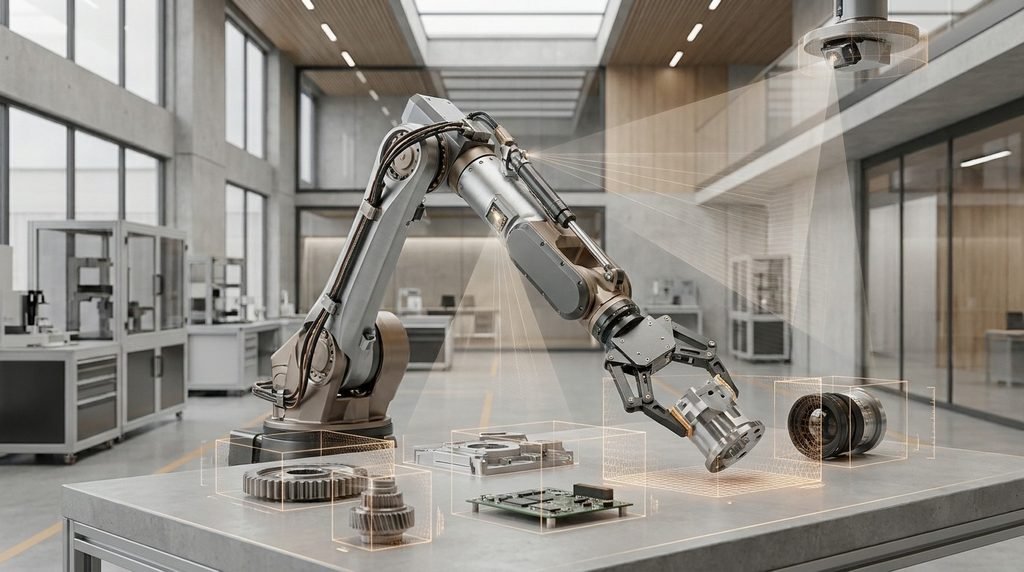
For example, a robotic assistant may need to locate a particular component, understand whether another object blocks its path, and determine how to approach it safely.
MIT researchers reported a spatial memory framework in June 2026 that combines detailed visual descriptions with spatial mapping. Their research illustrates how robots may become better at remembering and retrieving information about previously observed environments.
More Capable AI-Powered Robots
Robotics is another area where visual intelligence could have a significant impact.
Robots need to recognize objects, estimate distances, interpret human actions, and adapt when the physical environment changes.
Vision-language-action models are an emerging approach that connects visual observations and language instructions with robotic actions.
For instance, a person might instruct a robot to locate a particular item on a shelf. The system would need to understand the instruction, inspect the environment, identify the relevant object, and plan an appropriate action.
Reliable operation still requires accurate sensing, motion planning, safety controls, and extensive testing.
More Efficient Processing
Future systems will also need to become more efficient. Processing high-resolution video and complex multimodal information requires substantial computing resources.
Improved edge processors, optimized neural networks, and more efficient model architectures may help bring advanced visual capabilities to smaller devices.
This could make intelligent cameras, industrial sensors, and autonomous equipment more accessible.
Will AI Vision Replace Human Visual Inspection?
Not completely. Although automation can handle many repetitive and predictable tasks, humans remain important for interpreting unusual situations, evaluating uncertain results, and making decisions that require professional judgment.
The most practical future is likely to involve collaboration between automated systems and human specialists.
Frequently Asked Questions
Is AI vision technology the same as computer vision?
They are closely related. Computer vision is the broader field of enabling computers to interpret visual information. AI vision generally refers to approaches that use artificial intelligence, particularly machine learning and deep learning, to perform these tasks.
What is the difference between Vision AI and generative AI?
Vision AI focuses on interpreting visual information, while generative AI creates new content such as text, images, or other outputs. Some multimodal models combine both capabilities.
Can AI vision work without an internet connection?
Yes. Models deployed on compatible edge devices can analyze images locally without continuously sending information to cloud servers. However, their capabilities depend on hardware, model size, and available computing resources.
Which industries will benefit most from AI vision?
Manufacturing, healthcare, transportation, agriculture, logistics, and security are important application areas. The actual benefits depend on the specific problem and how reliably the technology is implemented.
Is AI vision technology expensive?
Costs vary considerably. A simple image-classification application may require relatively modest resources, while an advanced real-time industrial or robotic system may need specialized cameras, computing equipment, software integration, and ongoing maintenance.
Final Perspective
The development of visual intelligence is changing how machines interact with information from the physical world. What started as image classification and object detection is expanding into multimodal understanding, spatial reasoning, and intelligent automation.
The most important development is not simply that machines can recognize more objects. It is that they are increasingly being designed to connect what they see with other information, understand situations, and support actions.
For businesses, developers, and technology professionals, understanding these developments can help identify practical opportunities without overlooking technical limitations.
As models, sensors, and computing hardware continue to improve, visual AI is likely to become an increasingly important part of modern digital infrastructure. Its long-term value will depend on how effectively organizations combine technological capabilities with reliable data, human expertise, and responsible implementation.

One Response