
Artificial intelligence agents are becoming more capable every year, but building reliable AI systems requires more than giving a powerful model a simple instruction. Many developers discover that even advanced language models can struggle when they receive too much information, incomplete data, or poorly organized context. This is where Anthropic Effective Context Engineering for AI Agents becomes an important concept.
Context engineering focuses on designing the complete information environment that an AI agent uses while solving problems. Instead of only improving prompts, developers carefully manage memories, tools, retrieved information, instructions, and previous interactions to help AI agents make better decisions.
Modern AI agents are expected to handle complex tasks such as researching topics, writing code, analyzing documents, managing workflows, and interacting with external systems. These tasks require more than intelligence from the model itself. They require the right context at the right moment.
In this guide, we will explore what context engineering means, how it differs from traditional prompt engineering, and why it is becoming a critical skill for building reliable AI agents.
What Is Effective Context Engineering for AI Agents?
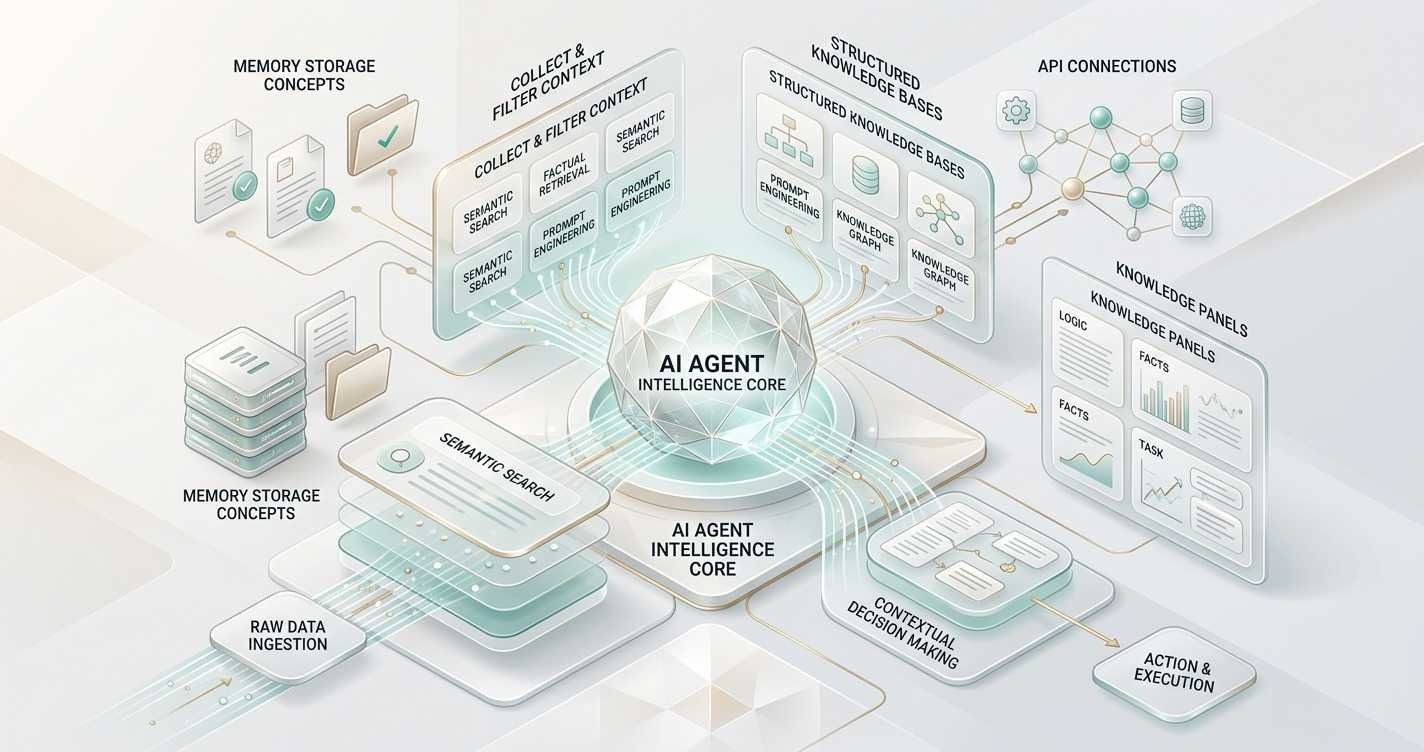
Effective Context Engineering for AI Agents is the process of designing, organizing, and optimizing the information provided to an AI model so it can complete tasks accurately and efficiently. It includes managing prompts, memory, tools, retrieved data, conversation history, and system instructions to create the best possible working environment for an AI agent.
In simple words, context engineering is about controlling what an AI agent knows, when it knows it, and how that information is presented.
A language model does not think like a human with unlimited memory. It works within a limited context window. Everything included in that context influences its responses, reasoning ability, and decision-making process.
For example, imagine an AI customer support agent handling thousands of conversations. If the system sends every previous customer message, company document, and tool output into every request, the model may become overwhelmed. Important details can get buried among unnecessary information.
Context engineering solves this problem by selecting and organizing only the most relevant information.
A well-designed AI agent may use:
- System-level instructions that define behavior
- Short-term conversation memory
- Long-term user preferences
- Retrieved knowledge from databases
- External tools and APIs
- Previous task summaries
- Real-time information
All these elements create the agent’s working context.
Why Context Engineering Matters for AI Agents
Traditional AI applications mostly depended on single prompts. A user entered a question, and the model generated an answer. However, AI agents work differently.
Agents often need to:
- Plan multiple steps
- Use external tools
- Remember previous actions
- Analyze large amounts of information
- Adapt based on new inputs
Without proper context management, agents can experience problems such as:
Poor Decision Making
An AI agent may have access to useful information but fail to use it because the information is hidden inside a large context window.
Good context engineering ensures the model receives important details in a clear structure.
Increased Token Usage
Large unnecessary contexts increase processing costs and slow down responses.
Efficient context design removes irrelevant information while keeping valuable knowledge available.
Reduced Accuracy
When an AI receives conflicting instructions or excessive data, it may produce inconsistent answers.
Context engineering helps maintain focus and improves reliability.
The Evolution From Prompt Engineering to Context Engineering
Prompt engineering was one of the earliest skills developed around large language models. It focused on writing better instructions to get better outputs.
For example:
“Write a detailed article about AI.”
could become:
“You are an expert technology writer. Create a detailed article about AI trends with examples.”
This improves results, but modern AI agents require a broader approach.
An agent does not only need instructions. It needs:
- Relevant background information
- Access to tools
- Previous knowledge
- Current task state
- Clear goals
This is why companies working on advanced AI systems are focusing more on context engineering.
[Link to related article here: Prompt Engineering Best Practices]
Real-World Example of Context Engineering
Consider an AI coding assistant.
A simple chatbot may only receive:
“Fix this Python error.”
But an effective coding agent may receive:
- The user’s project structure
- Previous code changes
- Error logs
- Documentation
- Coding standards
- Testing results
The second system has better context, so it can provide more accurate solutions.
The difference is not necessarily the intelligence of the model. The difference is the quality of information provided to it.
Context Engineering vs Prompt Engineering: Key Differences
Many people confuse context engineering with prompt engineering because both involve improving AI outputs. However, they solve different problems.
Prompt engineering focuses on creating better instructions, while context engineering focuses on designing the complete environment around an AI agent.
| Feature | Prompt Engineering | Context Engineering |
| Main Focus | Writing instructions | Managing complete information flow |
| Scope | Single prompt | Entire AI workflow |
| Used For | Better responses | Reliable AI agents |
| Includes | Instructions and examples | Memory, tools, data, prompts |
| Complexity | Basic to intermediate | Advanced AI system design |
Prompt engineering asks:
“How should I ask the AI?”
Context engineering asks:
“What information should the AI have before making a decision?”
Why Prompt Engineering Alone Is Not Enough
Modern AI agents operate in dynamic environments.
A research agent may need:
- Previous research notes
- Search results
- User preferences
- Source credibility information
A business automation agent may need:
- Customer records
- Company policies
- Workflow rules
- Previous interactions
A single prompt cannot manage all these changing factors.
This is where context engineering becomes essential.

How Context Engineering Improves AI Performance
Effective context engineering improves AI systems in several ways.
Better Reasoning
When an AI agent receives organized information, it can focus on solving the actual problem instead of searching through irrelevant details.
More Consistent Responses
Clear instructions and structured memory reduce unpredictable outputs.
Improved Tool Usage
Agents can understand when and how to use external tools because the necessary information is available in context.
Lower Resource Consumption
Removing unnecessary information helps reduce token usage and improves efficiency.
Practical Example: AI Research Agent
Imagine an AI research assistant.
Without context engineering:
User asks: “Find information about renewable energy.”
The AI receives a basic request and may generate a general answer.
With context engineering:
The agent receives:
- User’s research goal
- Previous findings
- Preferred sources
- Required format
- Existing documents
Now the AI can produce a much more useful result.
The improvement comes from better context management, not just from the model itself
.
Core Components of Effective Context Engineering
Effective context engineering is not based on one single technique. It is a combination of different systems and strategies that help AI agents understand tasks, access useful information, and make better decisions. A powerful AI model can only perform as well as the context it receives. If the information is incomplete, outdated, or poorly structured, even an advanced model may generate weak results.
The main goal of context engineering is to create a balanced environment where an AI agent has enough information to solve a problem without being overloaded with unnecessary details.
Context Window Management
One of the most important parts of effective context engineering is managing the context window. Every large language model has a limited amount of information it can process at one time. This limit includes user messages, system instructions, previous conversations, tool outputs, and retrieved documents.
When an AI agent receives too much information, a problem called context overload can happen. Important instructions may become less noticeable because they are surrounded by excessive data. This can reduce accuracy and make the agent forget important requirements.
For example, a software development agent working on a large project does not need to read every file in the entire codebase for every request. A better approach is to provide only the relevant files, recent changes, error messages, and project rules connected to the current task.
Good context engineering focuses on selecting useful information instead of simply adding more information.
Memory Design and Management
Memory is another major component of AI agent systems. Unlike humans, AI models do not naturally remember previous conversations or experiences unless developers create memory systems around them.
Context engineering helps decide what information should be stored, what should be removed, and what should be brought back when needed.
A well-designed memory system usually separates temporary information from long-term knowledge. Temporary memory helps an agent complete the current task, while long-term memory stores valuable information that can improve future interactions.
For example, an AI writing assistant may remember a user’s preferred writing style, content format, and previous projects. However, it does not need to remember every single message from every conversation.
The challenge is not creating unlimited memory. The challenge is creating useful memory.
Poor memory design can create confusion because outdated or unnecessary information may influence future responses. Effective context engineering ensures that stored knowledge remains relevant and helpful.
Retrieval-Augmented Context
Modern AI agents often need access to external information because language models do not automatically know private company documents, updated databases, or personal files.
Retrieval-augmented generation, commonly known as RAG, solves this problem by allowing AI systems to retrieve relevant information when needed.
Instead of placing thousands of documents directly into the model’s context, the system searches for the most relevant information and provides only those sections.
For example, an enterprise AI assistant may have access to thousands of internal documents. When an employee asks a question about company policy, the agent retrieves the specific policy document instead of sending the entire database to the model.
This approach improves accuracy, reduces unnecessary context, and makes AI responses more reliable.
[Link to related article here: How RAG Improves AI Agent Accuracy]
Tool and API Context Management
AI agents are becoming more powerful because they can use external tools. They can search the web, access databases, run code, analyze files, and communicate with other systems.
However, giving an AI agent access to many tools does not automatically make it effective. The agent needs the right context to understand when and how each tool should be used.
For example, a financial analysis agent may have access to calculation tools, market data APIs, and reporting systems. If the agent receives unclear tool descriptions or unnecessary outputs, it may choose the wrong action.
Effective context engineering ensures that tools provide clean, structured information that the AI can understand easily.
The quality of tool integration often determines whether an AI agent behaves like a reliable assistant or an unpredictable chatbot.
How AI Agents Manage Context Across Complex Tasks
AI agents are designed to complete tasks that involve multiple steps. Unlike simple question-answer systems, agents often need to plan, analyze, take action, review results, and adjust their approach.
Managing context throughout this process is one of the biggest challenges in AI agent development.
A complex task can generate a large amount of information. The agent may create notes, receive tool responses, analyze documents, and make decisions. Without proper context management, the system can quickly become inefficient.
Effective context engineering creates a process where information is continuously organized and updated.
The Context Lifecycle of an AI Agent
Every AI agent follows a context lifecycle. It begins when the agent receives a goal and collects the information required to complete it.
During the planning stage, the agent identifies the objective and determines what knowledge is needed. It does not require every possible piece of information. It only needs the context that supports the current decision.
During execution, the agent interacts with tools and external systems. Each action creates new information that may become part of the working context.
The challenge is deciding which information should remain important and which information should be removed.
For example, an AI research agent searching for market trends may collect dozens of sources. Keeping every search result inside the context would make the system inefficient. Instead, the agent can summarize important findings and remove unnecessary details.
This process keeps the context focused.
Context Compression and Summarization
Long-running AI agents often need context compression techniques. Instead of keeping every previous interaction, the system creates summaries that preserve important information.
A good summary includes decisions, key facts, unresolved problems, and important instructions.
For example, an AI project management agent working on a six-month project does not need thousands of previous messages. It needs a concise record of project goals, completed tasks, current challenges, and upcoming actions.
Context compression allows AI agents to work on long tasks without exceeding context limits.
Multi-Agent Context Sharing
Many advanced AI systems use multiple specialized agents instead of one general agent.
One agent may handle research, another may analyze data, and another may review the final output.
In these systems, context sharing becomes extremely important. Each agent should receive the information required for its role, but not unnecessary details from other agents.
For example, a content creation system may have a research agent collecting information, a writing agent creating drafts, and an editing agent improving quality.
The writing agent does not need every technical detail from the research process. It needs organized findings that help create accurate content.
This selective sharing improves efficiency and reduces confusion.
Avoiding Context Rot
Context rot happens when an AI agent receives too much information over time and starts performing worse.
More context does not always mean better results. Sometimes additional information creates distractions and reduces the model’s ability to focus on important details.
Effective context engineering prevents context rot by continuously cleaning, organizing, and prioritizing information.
This principle is especially important for autonomous AI agents that operate for long periods.
The future of AI agents will depend not only on making models more intelligent but also on creating smarter systems for managing information around those models. Context engineering provides the foundation for building AI agents that are more accurate, efficient, and dependable.
Effective context engineering for AI agents
Best Practices for Building Context-Aware AI Agents
Building a context-aware AI agent requires more than connecting a language model with a few tools. The real challenge is creating a system that understands what information matters, when it matters, and how that information should influence decisions. Effective context engineering helps AI agents become more reliable by controlling the flow of knowledge, instructions, memory, and external data.
A strong context-aware agent starts with a clear understanding of its purpose. Before adding tools, memory systems, or retrieval methods, developers need to define what the agent is expected to accomplish. An AI customer support agent, coding assistant, and research assistant all require completely different types of context. Giving every agent the same information structure usually creates unnecessary complexity.
The first best practice is designing a focused context strategy. Instead of sending large amounts of information to the model, developers should identify the minimum useful context required for each task. This approach improves reasoning quality because the AI can concentrate on relevant information rather than processing unnecessary details.
For example, an AI legal assistant does not need access to every document in a database when answering a specific contract question. It needs the relevant clauses, related regulations, previous decisions, and user requirements connected to that particular request.
Another important practice is creating a reliable memory system. AI agents that work across multiple sessions need memory to maintain continuity, but storing everything creates problems. Effective systems separate temporary task information from valuable long-term knowledge.
A well-designed memory system understands the difference between information that helps complete today’s task and information that improves future interactions. This prevents outdated details from influencing new decisions.
The quality of retrieved information also plays a major role in context-aware AI systems. Retrieval systems should focus on accuracy rather than quantity. Providing ten highly relevant documents is usually better than providing hundreds of unrelated results.
The following comparison shows how traditional AI systems differ from properly engineered context-aware agents:
| Traditional AI Approach | Context-Aware AI Agent Approach |
| Relies mainly on fixed prompts | Uses dynamic context based on the situation |
| Receives large amounts of information | Receives carefully selected relevant information |
| Limited memory capability | Uses structured short-term and long-term memory |
| Generates responses from available context only | Retrieves external knowledge when required |
| Less adaptable to complex workflows | Adjusts decisions based on changing information |
Tool integration is another critical area. AI agents often interact with APIs, databases, search engines, and software environments. However, tools should not simply provide raw outputs. The information returned from tools should be organized in a format that the AI model can easily understand.
For instance, a data analysis agent connected to a business database should not receive thousands of database records without structure. Instead, it should receive filtered results, summaries, and meaningful patterns that support decision-making.
Testing and evaluation are also essential parts of building effective AI agents. Developers should analyze how the agent behaves in different situations, including unclear requests, missing information, and complex workflows. Context engineering is an ongoing improvement process because the quality of an agent depends on how well its information environment is designed.
A context-aware AI agent is not created by simply adding more data. It is created by building a thoughtful system where information is managed intelligently.
Common Context Engineering Mistakes to Avoid
While context engineering can significantly improve AI agents, poor implementation can create new problems. Many AI systems fail not because the underlying model is weak, but because the information provided to the model is poorly managed.
One common mistake is treating context as unlimited space. Developers sometimes believe that adding more documents, instructions, and previous conversations will automatically improve results. In reality, excessive information can reduce performance.
When an AI agent receives too much context, it may struggle to identify the most important details. Important instructions can become hidden among less relevant information, causing inconsistent answers and weaker reasoning.
Another frequent mistake is ignoring context quality. The accuracy of an AI agent depends heavily on the quality of the information it receives. Outdated documents, duplicated data, and conflicting instructions can negatively affect decision-making.
For example, if an AI customer service agent receives two different company policies about refunds, it may provide incorrect information. The problem is not the model’s intelligence; the problem is conflicting context.
Poor memory management is another major issue. Some systems store every interaction without considering whether that information remains useful. Over time, this creates unnecessary complexity and increases the possibility of incorrect responses.
Effective memory requires regular cleaning, updating, and prioritization. AI agents should remember valuable information while ignoring temporary details that no longer matter.
Another mistake is failing to design context around specific tasks. Different AI agents require different context structures. A coding agent needs access to source code and technical documentation, while a marketing agent may need customer insights and brand guidelines.
Using the same context strategy for every AI application usually leads to inefficient systems.
Many developers also underestimate the importance of tool outputs. External tools can provide valuable information, but raw outputs can overwhelm the AI model. Tool responses should be summarized, filtered, and formatted before becoming part of the agent’s context.
Finally, many AI systems lack proper evaluation methods. Without testing, developers cannot understand whether context changes are improving performance or creating new problems.
Successful context engineering requires continuous monitoring. Developers need to analyze agent behavior, identify weak points, and refine the information flow.
The biggest lesson is that more context is not always better. Better-organized context is what creates smarter and more reliable AI agents.
Also Read: Common SEO Mistakes Small Businesses Make & How to Fix Them
Future of Context Engineering in Autonomous AI Systems
As AI agents become more autonomous, context engineering will become one of the most important areas of artificial intelligence development. Future AI systems will not only generate responses but also plan, execute tasks, learn from interactions, and operate independently for longer periods.
The next generation of AI agents will require advanced context management systems that can dynamically understand what information is needed at every stage of a task.
Currently, many AI applications depend on manually designed prompts and fixed workflows. However, autonomous systems will need the ability to manage their own context. This means future agents may decide what information to retrieve, what memories to keep, and what details are no longer useful.
One major development area will be intelligent memory systems. Future AI agents will likely move beyond simple storage methods and develop more advanced memory architectures that understand relationships between information.
Instead of remembering isolated facts, AI agents may create structured knowledge networks that help them make better decisions over time.
Another important trend will be improved collaboration between multiple AI agents. As organizations use specialized AI systems for research, analysis, development, and automation, context sharing will become increasingly important.
Future multi-agent systems will need advanced methods for transferring knowledge between agents without overwhelming them with unnecessary information.
The growth of technologies such as retrieval-augmented generation and model context protocols will also influence the future of context engineering. These systems allow AI agents to connect with external knowledge sources and tools in more flexible ways.
However, the future challenge will not only be giving AI agents access to more information. The real challenge will be helping them understand which information deserves attention.
As autonomous AI systems become more powerful, context engineering will move from an optional improvement to a fundamental requirement. The success of future AI agents will depend on their ability to manage information intelligently.
The most advanced AI systems will not simply be models with more data. They will be carefully designed ecosystems where memory, tools, knowledge, and reasoning work together through effective context management.
In the coming years, context engineering will become a core discipline for anyone building reliable autonomous AI agents. It will define how AI systems understand complex environments, complete difficult tasks, and interact with humans in meaningful ways.