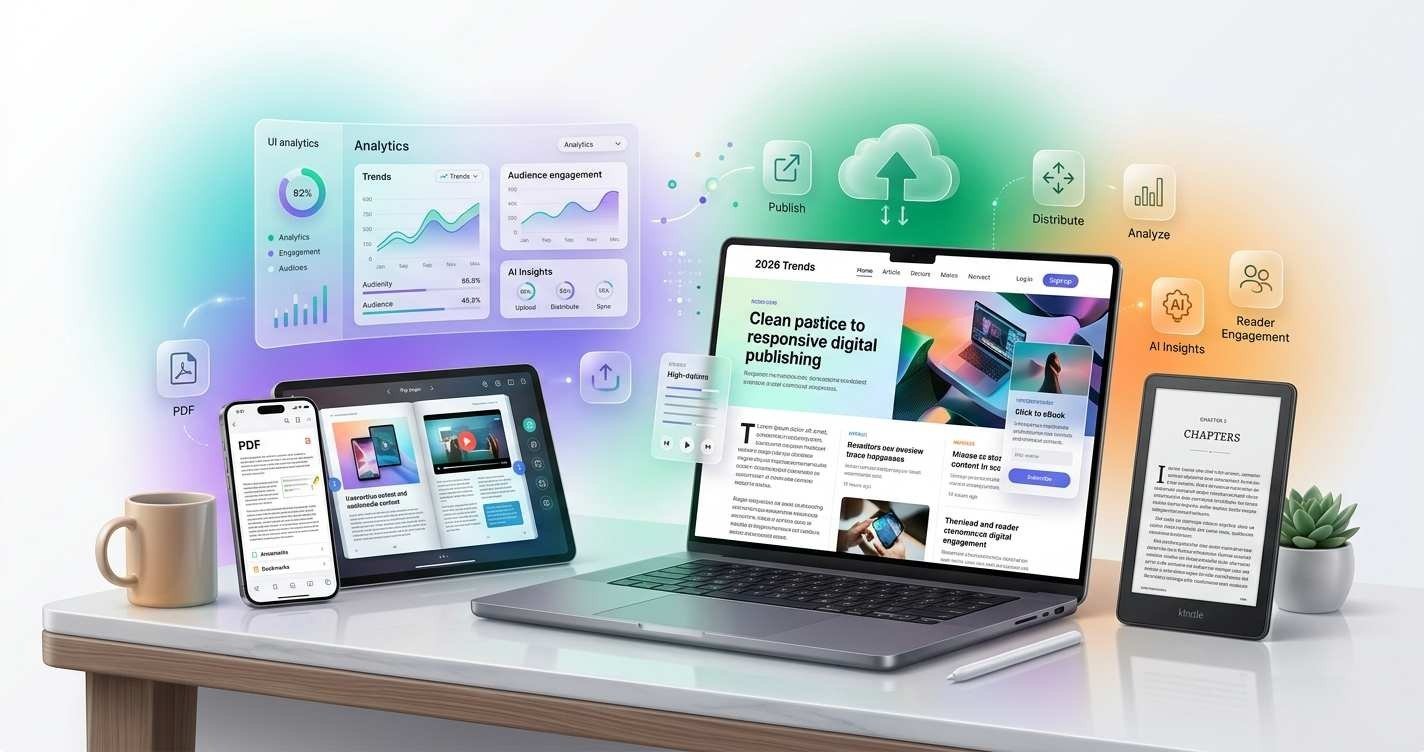
The way people consume digital content has changed dramatically over the last few years. Readers no longer rely on a single format to access information. Instead, they move between websites, eBooks, PDFs, mobile apps, audiobooks, and interactive articles depending on their device, location, and personal preferences. This shift has made publishing formats just as important as the quality of the content itself.
Understanding the Impact of Digital Publishing Formats on Readership in 2026 is essential for publishers, bloggers, educators, businesses, and content creators who want to reach larger audiences and keep readers engaged. A well-written article can still lose attention if it is presented in a format that feels outdated or difficult to use. On the other hand, the right publishing format can improve readability, increase time on page, encourage content sharing, and build long-term audience loyalty.
This guide explores how modern publishing formats influence reader behavior, why mobile-first experiences are becoming the standard, and how artificial intelligence and accessibility features are shaping the future of digital reading.
What Are Digital Publishing Formats and Why Do They Matter in 2026?
Digital publishing formats are the different ways content is created, displayed, and consumed across digital platforms. Instead of printing information on paper, publishers now distribute articles, books, reports, magazines, and educational resources through websites, mobile applications, eBooks, PDFs, EPUB files, newsletters, and even audio-based platforms. Each format offers a different reading experience, making it important to choose the one that best fits both the content and the audience.
Definition: Digital publishing formats are structured methods of presenting digital content across multiple devices and platforms. They determine how information is displayed, accessed, and interacted with, directly affecting readability, accessibility, engagement, and the overall user experience.
The Impact of Digital Publishing Formats on Readership in 2026 is greater than ever because readers have become more selective about how they consume information. Fast internet, smartphones, tablets, AI-powered recommendations, and cloud-based reading platforms have transformed audience expectations. People no longer judge content solely by its quality. They also expect quick loading speeds, responsive layouts, adjustable fonts, dark mode support, offline access, and seamless navigation.
For example, someone reading a detailed industry report may prefer a downloadable PDF for offline reference, while another reader looking for quick answers is more likely to choose a responsive web article that loads instantly on a smartphone. Students often favor EPUB books because they can resize text, highlight important sections, and synchronize their notes across multiple devices. Meanwhile, busy professionals increasingly consume knowledge through audiobooks and audio articles during commuting or exercise.
Publishers have also realized that a single format cannot satisfy every audience segment. Successful digital publishing strategies now combine multiple formats to maximize reach. A blog article may be published as a web page for search engines, converted into an eBook for subscribers, summarized as a newsletter, and adapted into audio for podcast listeners. This multi-format approach allows the same information to reach readers with different preferences without changing the core message.
Another reason digital publishing formats matter is their influence on search engine optimization. Search engines evaluate user experience alongside content quality. A well-structured HTML article with responsive design, optimized images, proper heading hierarchy, and fast loading times generally performs better than static content that offers limited usability. Publishers who prioritize user-friendly formats often experience improved visibility, longer reading sessions, and stronger audience retention.
The growing focus on accessibility has also increased the importance of publishing formats. Features such as screen reader compatibility, keyboard navigation, adjustable contrast, and scalable typography make content available to a broader audience, including readers with visual or physical impairments. Accessibility is no longer considered an optional feature but an essential part of modern publishing.
Ultimately, digital publishing formats are not simply technical choices. They shape how readers discover, experience, and remember content. In 2026, choosing the right format is a strategic decision that directly affects readership growth, engagement, and long-term content performance.
How Different Publishing Formats Influence Reader Engagement
Reader engagement is influenced by much more than compelling writing. The way information is presented often determines whether a visitor stays on a page, shares an article, or leaves within seconds. As digital consumption habits continue to evolve, publishers are paying closer attention to the relationship between content format and audience behavior.
The Impact of Digital Publishing Formats on Readership in 2026 becomes especially clear when comparing the strengths of different publishing formats. Each one serves a unique purpose and attracts readers with different expectations.
HTML articles remain the preferred format for online publishing because they are optimized for search engines, load quickly, and adapt well to different screen sizes. Readers appreciate the ability to jump between sections, interact with embedded media, and access related resources without downloading additional files. These advantages often lead to higher engagement and longer browsing sessions.
PDF documents continue to play an important role in professional and academic publishing. Reports, white papers, business proposals, and research papers benefit from a consistent layout that remains unchanged across devices. However, PDFs are generally less interactive than web pages and can create friction on smaller mobile screens, making them less suitable for casual reading.
EPUB has become one of the most flexible digital book formats available today. Unlike PDFs, EPUB files automatically adjust to different screen sizes and allow readers to personalize font size, spacing, and color themes. These customization options improve comfort during long reading sessions and encourage users to finish more content.
Audiobooks and narrated articles represent another major shift in reader engagement. Many people consume educational and informational content while driving, exercising, or performing daily tasks. Audio publishing extends the reach of written content by making it available during moments when traditional reading is impossible.
Interactive publishing has introduced another level of engagement. Articles that include videos, animations, quizzes, expandable sections, interactive charts, or clickable graphics encourage readers to actively participate rather than passively consume information. This interaction often improves information retention because readers become involved in the learning process instead of simply scrolling through text.
Publishers also recognize that engagement depends on matching the format to the reader’s intent. Someone searching for a quick answer expects a concise, mobile-friendly article, while a researcher may prefer a downloadable document with references and detailed explanations. Choosing the wrong format can reduce satisfaction even when the content itself is valuable.
The most successful publishers rarely depend on a single publishing format. Instead, they repurpose high-quality content across websites, eBooks, newsletters, downloadable guides, podcasts, and social platforms. This strategy allows readers to consume information in the way they find most convenient while maintaining consistent messaging across every channel.
As audience expectations continue to grow, engagement will increasingly depend on delivering excellent content through formats that are flexible, accessible, and optimized for modern digital behavior.
The Rise of Mobile-First and Interactive Reading Experiences
Smartphones have become the primary gateway to digital content for millions of readers worldwide. Whether someone is reading a news article during a commute, researching a product before making a purchase, or learning a new skill from an online guide, the experience usually begins on a mobile device. This change has made mobile-first publishing one of the defining trends behind the Impact of Digital Publishing Formats on Readership in 2026.
Mobile-first publishing is more than shrinking a desktop website to fit a smaller screen. It involves designing every element of the reading experience around mobile users from the beginning. Responsive layouts, larger touch-friendly buttons, readable typography, optimized images, and faster loading pages all contribute to a smoother experience that encourages readers to stay longer.
Attention spans on mobile devices are often shorter because users are surrounded by constant notifications and distractions. Publishers respond by organizing information into smaller sections, using descriptive headings, and presenting key ideas early in the article. This structure allows readers to quickly understand the value of the content while making it easier to continue reading.
Interactive content has also become an essential part of digital publishing. Instead of presenting information through plain text alone, publishers now combine articles with videos, image galleries, calculators, timelines, comparison tools, quizzes, and expandable content blocks. These elements transform reading into an active experience where users explore information at their own pace.
Interactive storytelling is particularly effective for educational content, technology guides, and business publications. For example, a software tutorial may include clickable demonstrations alongside written instructions, allowing readers to immediately apply what they learn. Financial articles often integrate calculators that help users estimate costs or compare investment scenarios without leaving the page.
Mobile-first design also supports stronger search performance. Search engines increasingly prioritize websites that provide fast loading times, responsive layouts, secure browsing, and excellent usability across different devices. Publishers who optimize these technical factors often benefit from improved rankings, lower bounce rates, and higher reader satisfaction.
Another important trend is the growing integration of multimedia without overwhelming the user. Successful publishers carefully balance visuals and written content so that images, infographics, and videos support the article instead of distracting from it. Readers appreciate content that remains informative while offering visual explanations for complex topics.
As technology continues to advance, mobile-first and interactive publishing will become the standard rather than the exception. Readers increasingly expect content that is easy to navigate, visually engaging, and optimized for every device they use throughout the day.
AI Personalization and Accessibility Are Changing Reading Habits
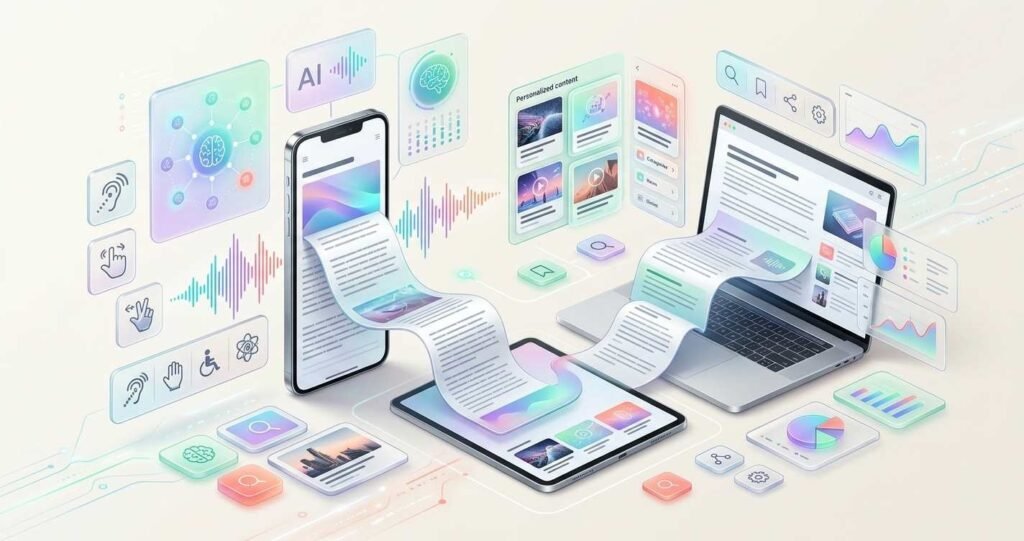
Artificial intelligence is reshaping the way readers discover, consume, and interact with digital content. Instead of manually searching through hundreds of articles, users increasingly receive personalized recommendations based on their interests, reading history, and browsing behavior. This evolution has become one of the strongest drivers behind the Impact of Digital Publishing Formats on Readership in 2026.
AI-powered recommendation systems help readers find relevant content more quickly. News websites suggest related stories, educational platforms recommend learning resources, and digital libraries present books that align with previous reading preferences. This personalized approach reduces information overload while increasing the likelihood that readers will continue exploring additional content.
Publishers also use artificial intelligence to improve content presentation. AI can recommend optimal article length, identify sections where readers typically stop scrolling, suggest internal links, and even analyze readability. These insights help content creators refine the reading experience without compromising editorial quality.
Accessibility has become equally important in modern publishing. Digital content should be usable by everyone, regardless of physical ability or device limitations. Accessibility features such as screen reader compatibility, keyboard navigation, adjustable font sizes, high-contrast viewing modes, captioned multimedia, and descriptive image text ensure that information reaches the widest possible audience.
Many accessibility improvements also benefit readers without disabilities. Adjustable typography reduces eye strain during extended reading sessions, dark mode improves comfort in low-light environments, and responsive layouts create a consistent experience across smartphones, tablets, and desktop computers. These enhancements contribute to better engagement for every visitor.
AI is further expanding accessibility through real-time translation, voice-assisted navigation, automated captions, and text-to-speech functionality. Readers can consume information in their preferred language or switch between reading and listening depending on their environment. These capabilities make digital publishing more inclusive while expanding the global reach of online content.
Trust also plays a significant role in AI-driven publishing. Readers value personalized experiences but still expect accurate, transparent, and well-researched information. Responsible publishers balance AI-assisted recommendations with human editorial oversight to maintain credibility and prevent misleading content from gaining visibility.
Looking ahead, personalization and accessibility will continue working together rather than separately. AI will help deliver the right content to the right audience, while accessible publishing formats will ensure that every reader can comfortably engage with that content. Publishers who embrace both priorities will be better positioned to build loyal audiences in an increasingly competitive digital landscape.
Challenges Publishers Face Across Modern Digital Formats
The rapid growth of digital publishing has created exciting opportunities, but it has also introduced new challenges that publishers cannot ignore. While readers expect fast, personalized, and seamless experiences, delivering content across multiple formats requires careful planning, continuous optimization, and a deep understanding of audience behavior. The Impact of Digital Publishing Formats on Readership in 2026 is shaped not only by technological innovation but also by how effectively publishers overcome these evolving obstacles.
One of the biggest challenges is maintaining consistency across different publishing formats. A long-form article may look perfect on a desktop website but lose readability when converted into a PDF or viewed on a smartphone. Similarly, interactive elements that perform well in an HTML article may not function in downloadable documents or eBook formats. Publishers must ensure that the core message remains clear regardless of where or how the content is consumed.
Another major concern is the growing diversity of devices. Readers access content through smartphones, tablets, laptops, desktop computers, eReaders, and even smart TVs. Every device has different screen sizes, operating systems, and performance capabilities. Creating a reading experience that feels natural across all of them requires responsive design, optimized media files, and continuous testing.
Content discoverability has also become increasingly competitive. Millions of new articles are published every day, making it difficult for quality content to reach its intended audience. Even outstanding content can struggle if the publishing format slows page speed, creates poor navigation, or limits search engine visibility. Publishers must balance creative design with technical SEO best practices to remain competitive.
Monetization presents another ongoing challenge. Readers appreciate free content, but publishers still need sustainable revenue models. Subscription systems, advertisements, sponsored content, memberships, and premium downloads all depend on user experience. Intrusive ads or aggressive paywalls often reduce engagement and increase bounce rates, while a carefully balanced approach encourages readers to return.
Security and copyright protection have also gained importance. Digital content can be copied, redistributed, or modified more easily than printed materials. Publishers increasingly invest in content protection technologies, watermarking, secure distribution platforms, and licensing agreements to protect intellectual property without creating unnecessary barriers for legitimate readers.
Artificial intelligence has introduced both opportunities and concerns. AI-powered content recommendations improve discovery, but publishers must ensure that personalization does not create information bubbles where readers only encounter familiar perspectives. Editorial oversight remains essential for maintaining trust, accuracy, and diversity of viewpoints.
Accessibility regulations continue to evolve as governments and organizations place greater emphasis on inclusive digital experiences. Publishers who fail to support screen readers, keyboard navigation, descriptive image text, or accessible color contrast risk excluding valuable audience segments while potentially facing legal compliance issues in certain regions.
The following table summarizes some of the most common publishing challenges and practical solutions adopted by successful digital publishers.
| Publishing Challenge | Effect on Readership | Practical Solution |
| Poor mobile optimization | Higher bounce rates | Mobile-first responsive design |
| Slow page loading | Reduced engagement | Image optimization and caching |
| Multiple content formats | Inconsistent experience | Unified publishing workflow |
| Accessibility limitations | Smaller audience reach | WCAG-compliant design |
| Content overload | Lower retention | Personalized recommendations |
| Copyright concerns | Unauthorized distribution | Digital rights management and licensing |
The most successful publishers understand that challenges are not temporary obstacles but ongoing responsibilities. As technology evolves, continuous testing, audience feedback, and strategic improvements become essential for maintaining strong readership. Rather than treating digital publishing as a one-time process, leading organizations view it as a cycle of adaptation that responds to changing reader expectations and technological advancements.
Best Practices for Choosing the Right Digital Publishing Format
Selecting the right publishing format is one of the most important decisions in any content strategy. Even well-researched information may fail to reach its full potential if it is presented in a format that does not match the audience’s needs. Understanding the Impact of Digital Publishing Formats on Readership in 2026 means recognizing that different formats serve different purposes, and successful publishers choose them based on user intent rather than personal preference.
The first step is understanding the goal of the content. Educational guides designed for search engines generally perform best as responsive HTML pages because they are easy to discover, update, and share. Research reports, white papers, and official documentation often benefit from PDF formatting because readers can download, print, and reference them later without losing the original layout.
Also Read: Complete SaaS Workflow Guide for Faster Business Process Automation
Long-form educational resources and digital books frequently achieve better results in EPUB format. Readers appreciate customizable fonts, adjustable spacing, bookmarking, and synchronization across devices. These features encourage longer reading sessions and improve completion rates, particularly for educational or professional material.
Audience behavior should also influence publishing decisions. A younger audience that spends most of its time on smartphones may expect interactive web content, short videos, and responsive layouts. Business professionals might prefer downloadable reports they can review during meetings, while commuters increasingly consume information through audio versions of articles and books.
Content updates provide another important consideration. HTML articles can be edited instantly whenever new information becomes available, making them ideal for fast-changing industries such as technology, healthcare, and digital marketing. Static formats like PDFs often require complete replacement whenever significant revisions occur.
Accessibility should never be treated as an afterthought. Choosing formats that support screen readers, scalable typography, voice navigation, and keyboard controls ensures that content remains available to the widest possible audience while improving the overall user experience.
Rather than relying on one format, many successful publishers adopt a multi-format publishing strategy. A single article may exist as a searchable web page, a downloadable PDF, an EPUB eBook, a newsletter summary, and an audio version. This approach increases reach without requiring entirely new content for every platform.
The following comparison highlights when each publishing format is most effective.
| Publishing Format | Best Use Case | Primary Advantage |
| HTML Web Article | Blogs, guides, news | SEO visibility and easy updates |
| Reports, white papers | Consistent formatting and offline access | |
| EPUB | Digital books and learning | Flexible reading experience |
| Audiobook | Educational and long-form content | Hands-free consumption |
| Interactive Web Content | Tutorials and product education | Higher engagement and retention |
Choosing the right format is ultimately about respecting reader preferences. Publishers who focus on convenience, usability, and accessibility create stronger relationships with their audiences over time. Instead of forcing readers into a single experience, they provide flexible options that allow individuals to consume content in the way that best fits their lifestyle. This reader-first mindset continues to define successful publishing strategies in 2026.
Also check: How to Improve Website User Experience for Better SEO Rankings
Future of Digital Publishing Formats Beyond 2026
Digital publishing continues to evolve at a remarkable pace, and the innovations emerging today are likely to reshape how readers interact with content in the years ahead. While current publishing strategies emphasize mobile optimization, accessibility, and personalization, the next phase will focus on creating experiences that are even more adaptive, intelligent, and immersive. The Impact of Digital Publishing Formats on Readership in 2026 provides a strong foundation for understanding where the industry is heading.
Artificial intelligence will become more deeply integrated into every stage of digital publishing. Instead of simply recommending articles, AI systems will adapt layouts, summarize long-form content, translate material into multiple languages, and even adjust presentation styles based on individual reading preferences. Readers may receive personalized versions of the same article depending on their interests, knowledge level, or preferred reading format.
Voice technology is expected to play an increasingly important role. Smart speakers, wearable devices, and AI assistants are encouraging more people to consume information through listening rather than traditional reading. Publishers who provide synchronized text and audio experiences will be better positioned to serve audiences that frequently switch between devices throughout the day.
Immersive content is another emerging trend. Interactive graphics, augmented reality, three-dimensional visualizations, and mixed-media storytelling are gradually becoming practical for educational, scientific, and business publications. These technologies help readers understand complex concepts through experience rather than explanation alone, making learning more engaging and memorable.
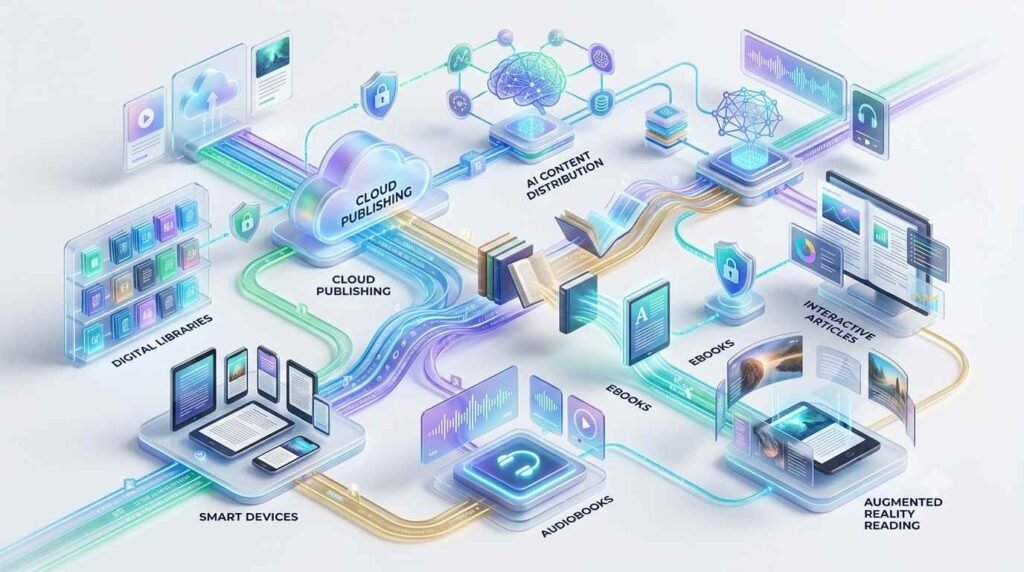
Cloud-based publishing ecosystems are also likely to expand. Instead of downloading separate files, readers will access synchronized libraries that automatically remember progress, notes, highlights, and bookmarks across multiple devices. This seamless continuity creates a more connected reading experience while encouraging long-term engagement with publishers.
Search behavior will continue to evolve alongside publishing formats. Readers increasingly expect direct answers, conversational interfaces, and AI-assisted search experiences. Publishers will need to structure content in ways that support both traditional search engines and emerging AI-powered discovery platforms while maintaining accuracy and editorial quality.
Sustainability may become another important influence on digital publishing decisions. As organizations seek environmentally responsible communication methods, digital-first publishing strategies could reduce dependence on printed materials while making information available to global audiences instantly.
Despite rapid technological progress, one principle will remain unchanged. Readers consistently value trustworthy, well-organized, and genuinely helpful information. New publishing formats can improve accessibility and engagement, but they cannot replace thoughtful research, clear communication, and credible expertise.
Looking beyond 2026, the future belongs to publishers who embrace innovation without losing sight of the reader. By combining emerging technologies with human-centered content strategies, digital publishers can create experiences that are informative, inclusive, and adaptable to the changing expectations of audiences worldwide.